 As I was out weeding late last evening, taking advantage of the soft ground after all the rain, there literally glowing in the dark was the beautiful rose Lady Hillingdon. Poor thing, like so many of my roses she’s had to adapt to several different homes as part of the ongoing relocation of sections of the garden. But this autumn, she’s taken charge … she’s put her pretty foot down and said this is where I’m staying. From a spindly, frail little thing she has emerged as the great beauty I knew she should be. Covered from head to toe in the loveliest colour I can’t actually find words to describe. Not apricot, not orange, not yellow, but a blended tone of those – the best I can offer is the colour of the mango gelati at Messina in Darlinghurst where we often used to go for a treat on the way home from dinner. Soft, satiny mango coloured blooms nodding elegantly down – she is the belle of the ball. So unspeakably lovely and graceful. Delicate, captivating, fragile. Hauntingly beautiful. And with a magnificent perfume that is just as hard to describe. It was too dark to photograph her so here are stock shots I felt captured her.

David Austin describes her thus: “A vigorous and hardy climbing rose, and one of the best tea roses still in existence. The blooms are made up of large petals, resulting in long, elegant, waxy buds, which open to large, loosely formed flowers of deep apricot-yellow. These hang gracefully from the branch and emit a delicious, rich tea fragrance. ‘Lady Hillingdon’ continues to flower throughout the summer with unusual regularity. It has fine contrasting dark green foliage, which is coppery mahogany when young. 15ft.”
And these comments from Paul Bardon do her justice – far better than I have managed.
“Lady Hillingdon, a tea. Bred by Lowe and Shawyer, UK 1910.
There is a certain quality about this rose that very nearly defies description. Whether it is the rich warm yellow coloring, the incredibly deep and unique fragrance, or the lovely contrasting reddish-plum colored foliage that makes this such an incredible beauty is hard to say. I have not had this plant of Lady Hillingdon long, and now I cannot imagine why I took so long in acquiring it! This bloom, which is about 4 inches across, opened on May 5th in my greenhouse, and it has been one bloom that I have visited many times daily for its scent.
I believe I have the shrub form of Lady Hillingdon, which is about 3′ tall and 2′ wide at maturity. (Bigger in warmer climates) There is a climbing variety that is more often grown that will climb to 15′ tall and 8′ wide. Although I have little experience with it yet, I understand that it has winter hardiness comparable to most Hybrid Teas. I would grow this rose for the fragrance alone.
As with most of the Tea roses, ‘Lady Hillingdon’ is a densely twiggy, slim-branched rose that gains slowly in size over several years. I find the graceful, finely branched form of the Tea roses to be very beautiful. If you live in an area where you can grow these roses, you should make them a part of your garden.”
Oh to have a rose named after you, let alone one as lovely as this. So who was this Lady Hillingdon?

Alice, Lady Hillingdon was born the Hon Alice Harbord-Hamond and married the second Lord Hillingdon. As a wedding present her father gave them property in Norfolk, where they built Overstrand Hall, according to Pevsner ‘one of Lutyens’s most remarkable buildings, at the time when he had reached maturity but still believed to the full in his own inventiveness’, but Lady Hillingdon reportedly preferred London, for the society.
It is said that in her journal for 1912, or in a letter to her mother (which sounds rather unlikely), Lady Hillingon wrote: ‘I am happy now that Charles calls on my bedchamber less frequently than of old. As it is, I now endure but two calls a week and when I hear his steps outside my door I lie down on my bed, close my eyes, open my legs and think of England.’
Sadly, her journal has been lost. Perhaps on purpose. But whether or not it was hers, what a gift that phrase has been.
The picture above is her portrait by Bassano, who photographed all the ladies of the day, from the National Portrait Gallery.
We will certainly try and stock this lovely tea rose at The Potting Shed for spring. And thank you to The History Girls for the lively story above. (http://the-history-girls.blogspot.com.au)
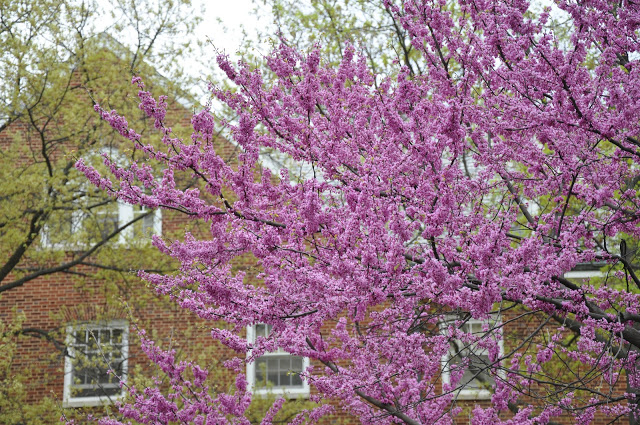

 I am so cross with myself. I had one very lovely Forest Pansy left at the shop and sold it to a young lady who was delighted with it after another customer waxed lyrical about it’s many attributes explaining what a great and beautiful tree it is. Now I wish I had brought it home for my own garden! Tomorrow I will be ordering more and snaffling one for myself – I have just the spot for it. Cercis canadensis ‘Forest Pansy’ is a very elegant small ornamental tree growing to a height of 4 metres and 4 metres wide. At the start of spring clusters of small rose pink, pea-like flowers cover the entire tree followed by shiny reddish purple, heart shaped leaves. The leaves become quite large giving a very lush appearance. In summer the older, more sheltered foliage will harden off to a deep green creating a contrast with the vibrant new growth. Autumn turns the leaves a golden colour prior to them dropping to let the winter sun back in.
















 The Potting Shed