Author: Maureen Gardner

Lady Hillingdon

portraitAs I was out weeding late last evening, taking advantage of the soft ground after all the rain, there literally glowing in the dark was the beautiful rose Lady Hillingdon.  Poor thing, like so many of my roses she’s had to adapt to several different homes as part of the ongoing relocation of sections of the garden.  But this autumn, she’s taken charge … she’s put her pretty foot down and said this is where I’m staying.  From a spindly, frail little thing she has emerged as the great beauty I knew she should be.  Covered from head to toe in the loveliest colour I can’t actually find words to describe.  Not apricot, not orange, not yellow, but a blended tone of those – the best I can offer is the colour of the mango gelati at Messina in Darlinghurst where we often used to go for a treat on the way home from dinner.  Soft, satiny mango coloured blooms nodding elegantly down – she is the belle of the ball.  So unspeakably lovely and graceful.  Delicate, captivating, fragile. Hauntingly beautiful.  And with a magnificent perfume that is just as hard to describe.  It was too dark to photograph her so here are stock shots I felt captured her.

rosa_lady_hillingdon2_5854

David Austin describes her thus: “A vigorous and hardy climbing rose, and one of the best tea roses still in existence. The blooms are made up of large petals, resulting in long, elegant, waxy buds, which open to large, loosely formed flowers of deep apricot-yellow. These hang gracefully from the branch and emit a delicious, rich tea fragrance. ‘Lady Hillingdon’ continues to flower throughout the summer with unusual regularity. It has fine contrasting dark green foliage, which is coppery mahogany when young. 15ft.” 

And these comments from Paul Bardon do her justice – far better than I have managed.

“Lady Hillingdon, a tea. Bred by Lowe and Shawyer, UK 1910.

There is a certain quality about this rose that very nearly defies description. Whether it is the rich warm yellow coloring, the incredibly deep and unique fragrance, or the lovely contrasting reddish-plum colored foliage that makes this such an incredible beauty is hard to say. I have not had this plant of Lady Hillingdon long, and now I cannot imagine why I took so long in acquiring it! This bloom, which is about 4 inches across, opened on May 5th in my greenhouse, and it has been one bloom that I have visited many times daily for its scent.

I believe I have the shrub form of Lady Hillingdon, which is about 3′ tall and 2′ wide at maturity. (Bigger in warmer climates) There is a climbing variety that is more often grown that will climb to 15′ tall and 8′ wide. Although I have little experience with it yet, I understand that it has winter hardiness comparable to most Hybrid Teas. I would grow this rose for the fragrance alone.

As with most of the Tea roses, ‘Lady Hillingdon’ is a densely twiggy, slim-branched rose that gains slowly in size over several years. I find the graceful, finely branched form of the Tea roses to be very beautiful. If you live in an area where you can grow these roses, you should make them a part of your garden.”

Oh to have a rose named after you, let alone one as lovely as this.  So who was this Lady Hillingdon?

219303

Alice, Lady Hillingdon was born the Hon Alice Harbord-Hamond and married the second Lord Hillingdon. As a wedding present her father gave them property in Norfolk, where they built Overstrand Hall, according to Pevsner ‘one of Lutyens’s most remarkable buildings, at the time when he had reached maturity but still believed to the full in his own inventiveness’, but Lady Hillingdon reportedly preferred London, for the society.

It is said that in her journal for 1912, or in a letter to her mother (which sounds rather unlikely), Lady Hillingon wrote: ‘I am happy now that Charles calls on my bedchamber less frequently than of old. As it is, I now endure but two calls a week and when I hear his steps outside my door I lie down on my bed, close my eyes, open my legs and think of England.’

Sadly, her journal has been lost. Perhaps on purpose. But whether or not it was hers, what a gift that phrase has been.

The picture above is her portrait by Bassano, who photographed all the ladies of the day, from the National Portrait Gallery.

We will certainly try and stock this lovely tea rose at The Potting Shed for spring. And thank you to The History Girls for the lively story above.   (http://the-history-girls.blogspot.com.au)
The Forest Pansy

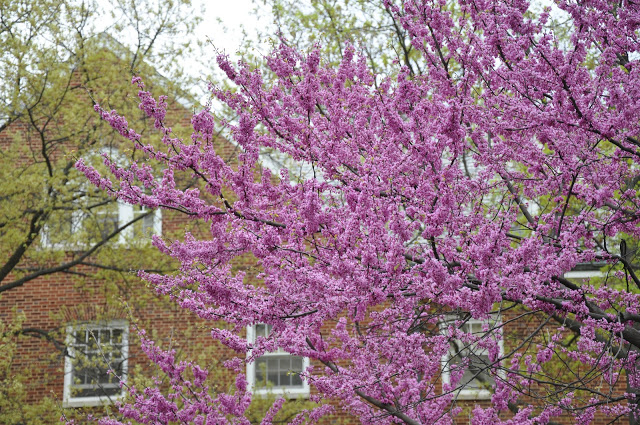
DSC_0407 DSC_0415forest_pansyI am so cross with myself.  I had one very lovely Forest Pansy left at the shop and sold it to a young lady who was delighted with it after another customer waxed lyrical about it’s many attributes explaining what a great and beautiful tree it is. Now I wish I had brought it home for my own garden!  Tomorrow I will be ordering more and snaffling one for myself – I have just the spot for it.   Cercis canadensis ‘Forest Pansy’ is a very elegant small ornamental tree growing to a height of 4 metres  and 4 metres wide.  At the start of spring clusters of small rose pink, pea-like flowers cover the entire tree followed by shiny reddish purple, heart shaped leaves. The leaves become quite large giving a very lush appearance. In summer the older, more sheltered foliage will harden off to a deep green creating a contrast with the vibrant new growth. Autumn turns the leaves a golden colour prior to them dropping to let the winter sun back in.
Forest Pansy can be used as a specimen tree or shrub, fence line screening, or just to add a splash of colour amongst your other shrubbery. It likes full sun or part shade, well drained fertile soil and needs mulch and summer water to really excel. It’s frost hardy, and in spite of it’s delicate and I think romantic appearance, it is quite hardy –  but keep it out of strong wind. If you’d like to add one to your collection, let me know and I’ll order one for you.

(Images via Google)

The silver birch walk

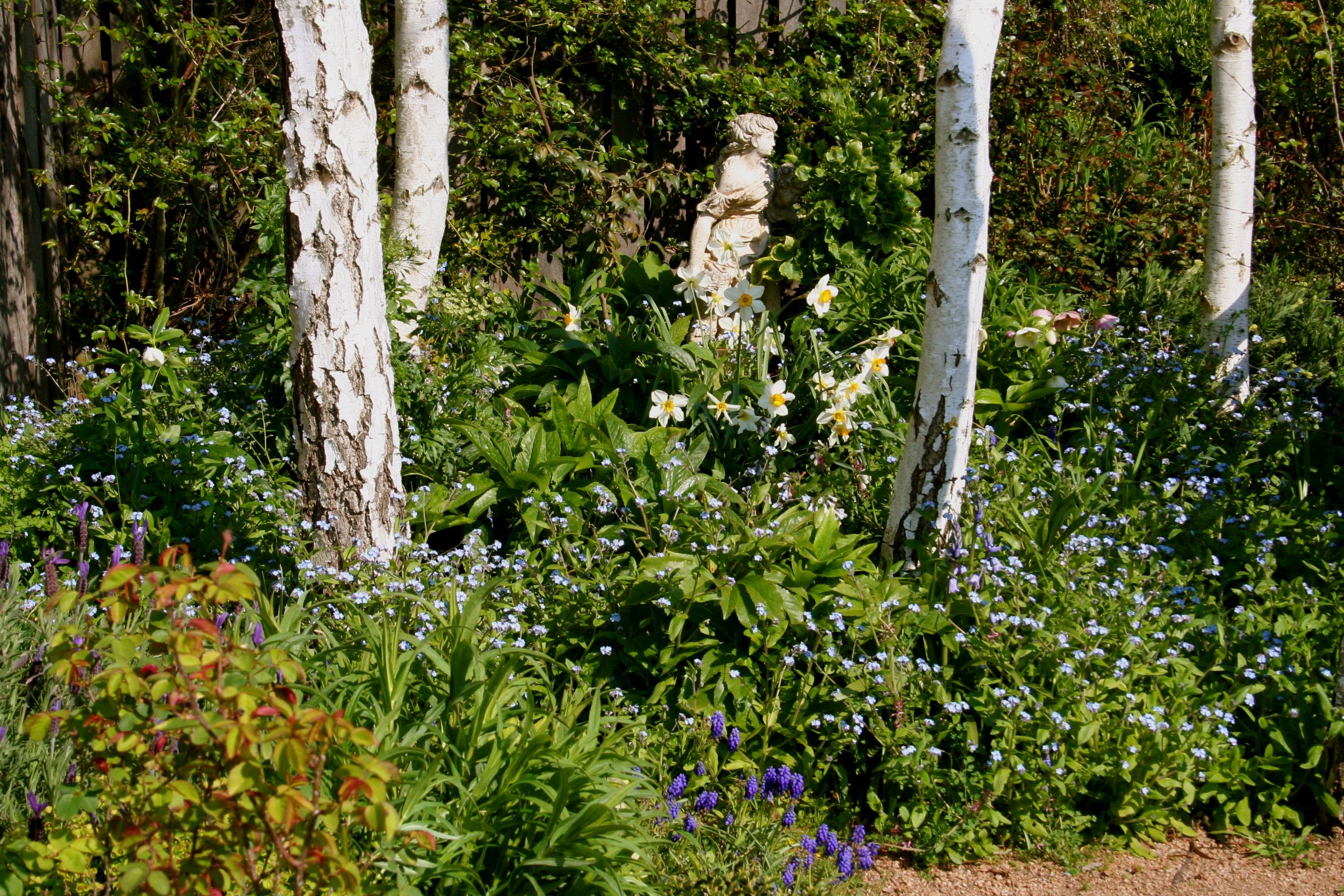
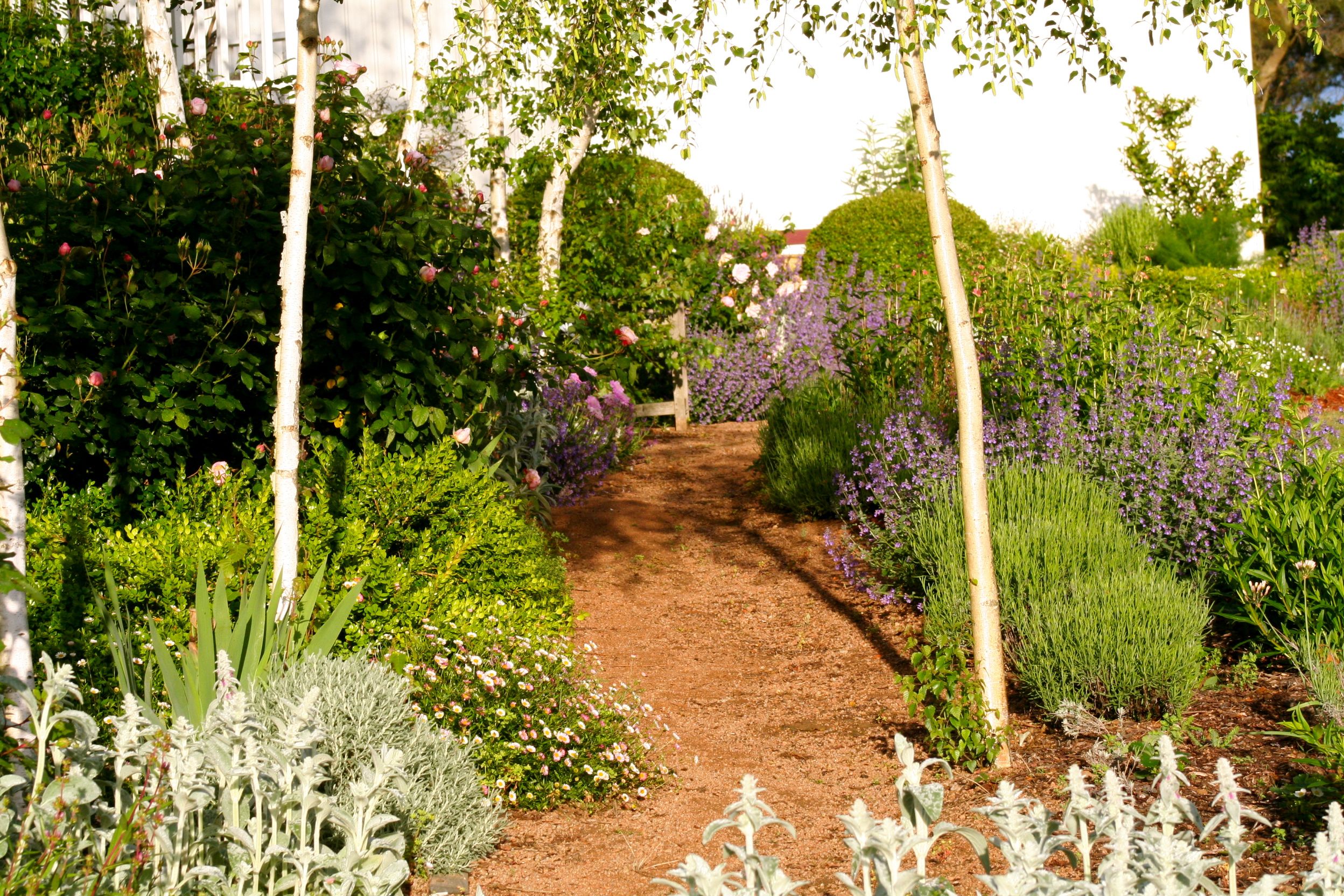
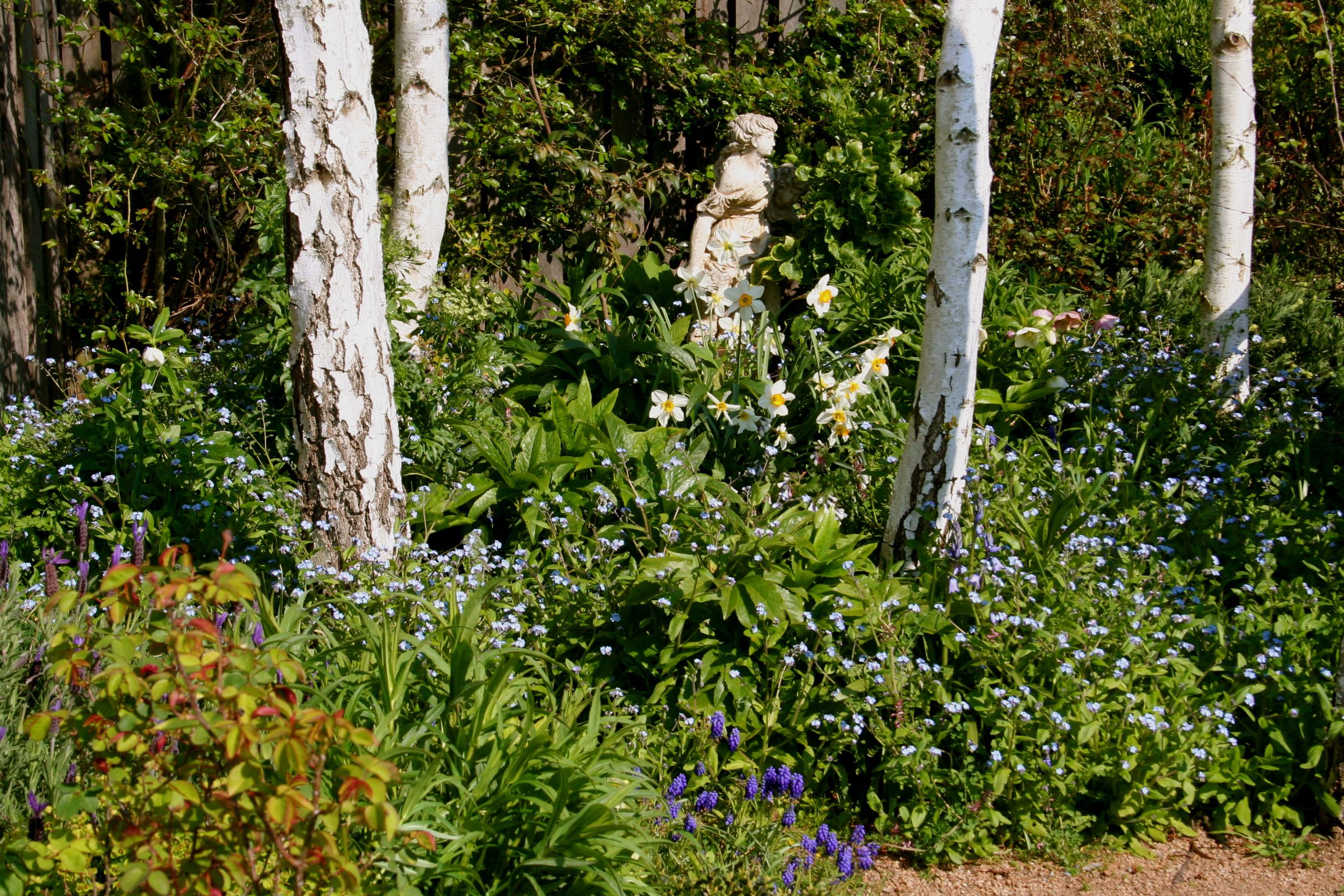
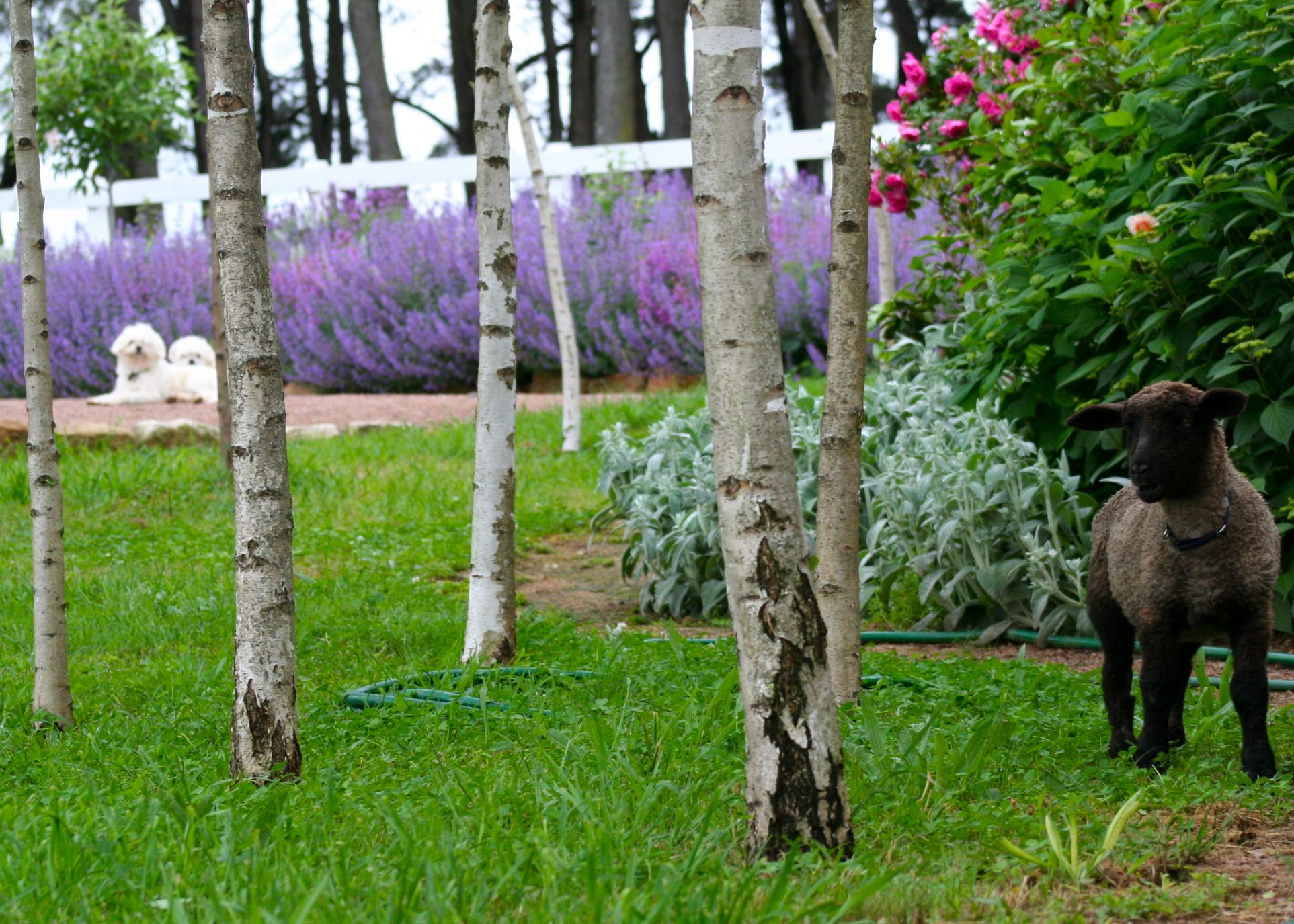
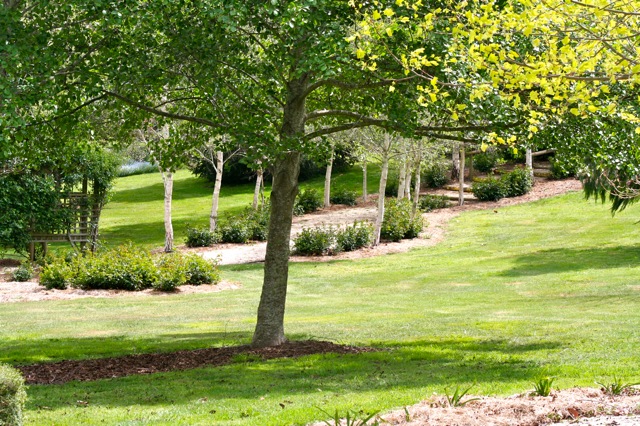
IMG_7538One of the first things we planted when we started our garden here in Sutton Forest was a little walk of silver birches, in those days to screen off an unsightly area of rain water tanks and to soften the house as you approached down the driveway. This idea kind of grew and now we seem to have lots and lots of silver birch walks!  One behind the citrus  garden,  which shades a pathway leading to the orchard.  Another one leads through the perennial garden to the north of the house and most recently, in a spontaneous moment of madness, I bought 300 (or was it 500?) to line the driveway last winter and create some light and shade effects  and lead your eye to the house.  They grow incredibly fast here in the Highlands and it seems the ones on the driveway love the acid from the pine needles that fall from a stand of pines nearby. Or perhaps it is the 4 inch layer of mulch that gives them a boost.  Either way the effect has been almost instant and the little  saplings are now already high enough to walk under and will by next summer form a pretty canopy to drive under.  For some reason some people don’t like them … I do.  I love them planted really close as they would be in natural woodland, and if I wasn’t responding to pressure to keep them spaced, I would plant them even closer.  That way the trunks stay slender and look amazing if pleached up really high leaving you with an ‘installation’ of silvery trunks.  What’s not to love about them, I say. And so, I will definitely be getting some in stock for you to enjoy at The Potting Shed.  IMG_7027Above:  Jack, Harry and Bella lamb chilling in the garden in SpringIMG_8491Above a view of a lovely silver birch lined path at The Burrows in Canyonleigh. IMG_1948Bluebells under birch at Whitley. IMG_6120Hellebores and forget me nots in one of our birch stands. IMG_6788

Choosing the right hedge

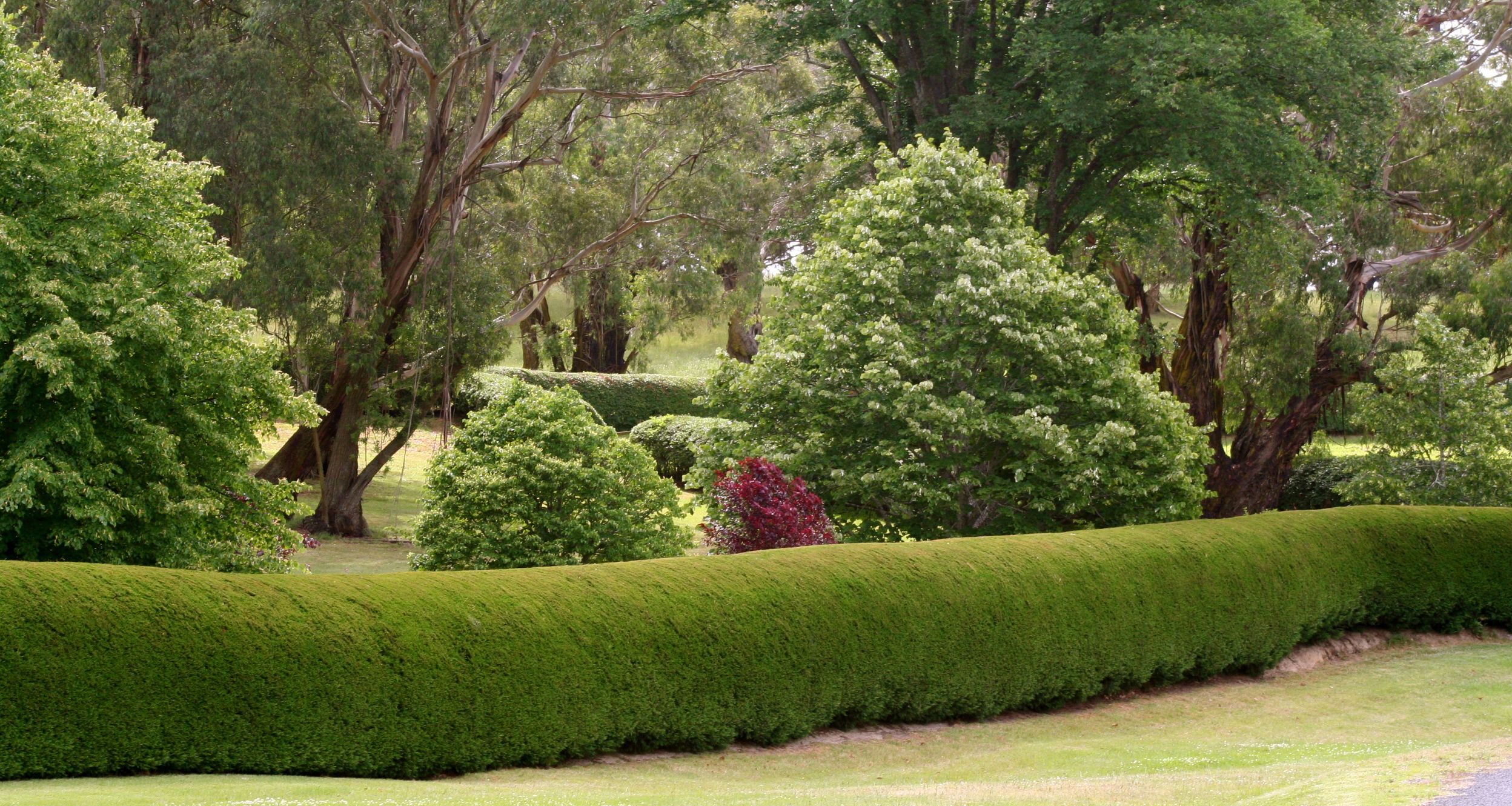
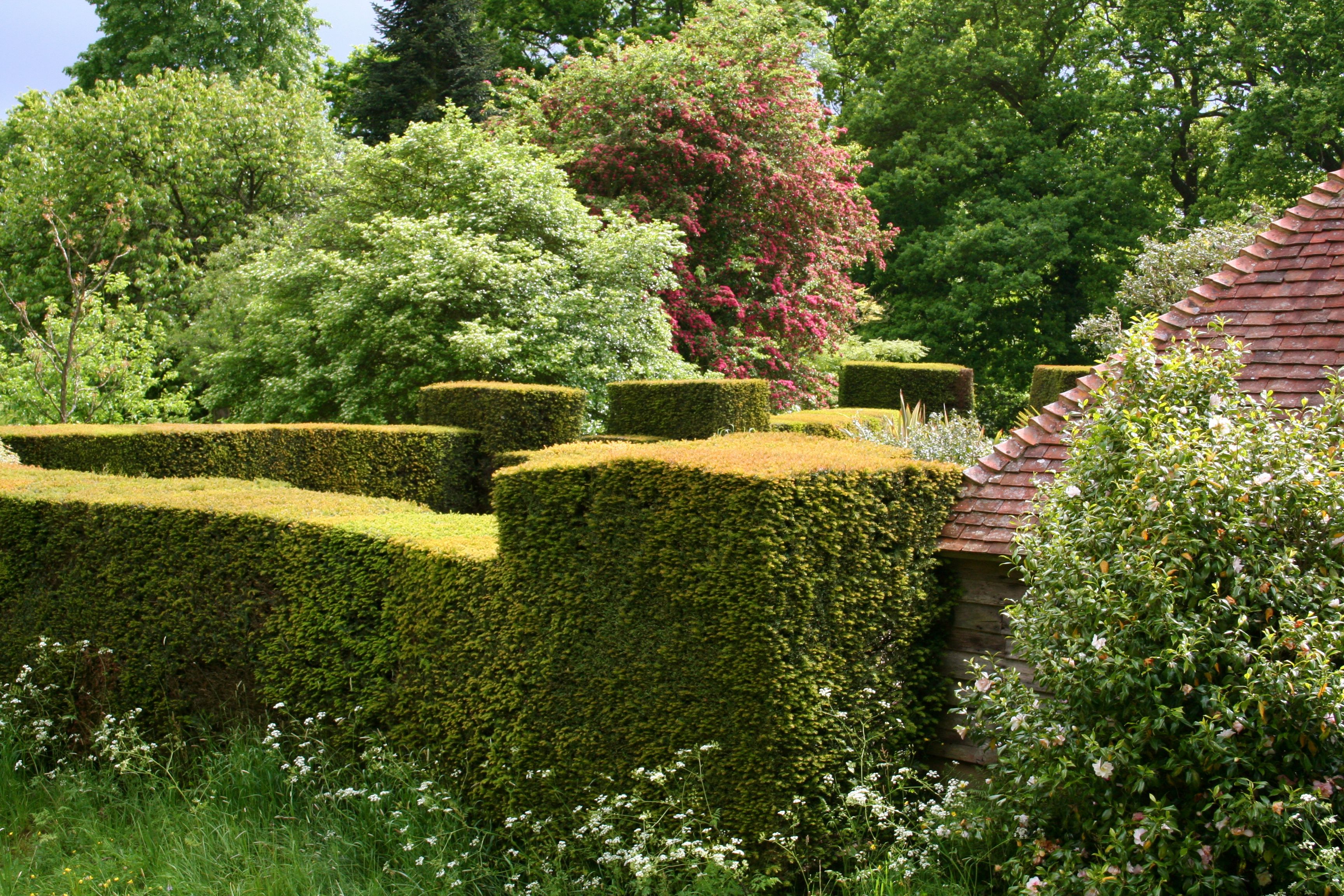
IMG_1985 IMG_1978 IMG_1979 Choosing the right hedge is a serious business – especially if you’re planning great areas of it. I procrastinated for months on what to use here at our farm where we started with a hundred acre blank canvas of gum studded paddocks.   We wanted something natural looking to suit our farm – not too formal, not too grand, not too fast, not too slow.  (Note: The pictures above are NOT at our farm, they are at the magnificent property Whitley just up the road.  I often drive past enviously admiring the stunningly manicured conifer and laid down hawthorn hedges that surround that property.)

It’s a big decision as you will live with it for a very long time and it will form the structure of your garden and is costly if you change your mind.  The best advice I can give on this is to drive around your district and take note of what others are using. Take your time. Do you prefer evergreen – a sharp edged conifer, a nice glossy cherry laurel or flowering camellia – or would you be happy with the elegant structure of a beautiful wall of deciduous hornbeam or beech with their russet winter leaves giving way to brilliant green in early spring? Whatever it is, it must match both your property and your budget as some need a lot more management than others and hedging on a large scale can be a considerable cost each year.

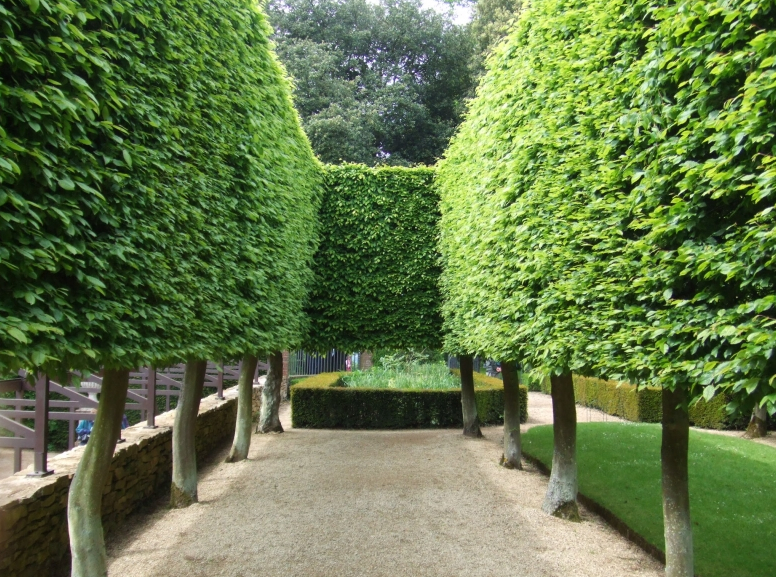
Hornbeam (Carpinus betulus) is my absolute favourite and will be playing a big part in future sections of our garden. It is not commonly used here in Australia as a deciduous hedge probably because people prefer beech, which it does resemble. But, the expert view is that hornbeam makes a superior hedge to beech, particularly, if you want to pleach or train it. I saw what is probably the most famous example of a pleached hornbeam hedge at Hidcote in Gloucestershire last year.  There, a pair of hedges is raised almost 2 metres on pleached trunks. It is fantastic to see and well worth a visit next trip to England.

hornbeam_hidcote

Both hornbeam and beech keep their leaves through winter though the hornbeam is a paler shade of russet than the beech – then in spring the brown leaves make way for a startling show of the freshest green you can imagine. Either will grow happily here in the Southern Highlands and a great example to view, winter and spring to see the colour contrast,  is at the lovely gardens at Red Cow Farm – open daily from 10am.  People think it’s too slow, but hornbeam will grow very fast if it has plenty of moisture, particularly when young and it does respond well to a rich, well-prepared ground. It will also grow well in heavy shade, though a little less luxuriantly than in full sunlight.  We are endeavouring to source some advanced hornbeam hedging at The Potting Shed – and hopefully some specimens on stilts which are great if you need to block out a new house on your boundary or screen where trees have been removed next door.

IMG_2703

Above:  the beautiful yew hedges at Great Dixter.  Unfortunately yew doesn’t like the Australian climate and dies back.  But there are many good conifers that will give you this firm, precise structure.

Summary: Carpinus betulus (European hornbeam)

Mature Height: 5-10m Sizes estimated at 10 years, and may vary depending on growing conditions. Aspect: Full sun/semi-shaded. Nice deciduous tree, used as formal hedging in cooler areas; conical in shape when young, becoming rounded with age. Mid-green serrated-edged leaves, with pale undersides turning a greenish yellow autumn colour; yellow catkins prominant in spring. Avoid hot sun and don’t allow to dry out in hot weather.

Oops sorry – here’s the correct Bee story

IMG_3628 Sorry, I posted the wrong version of my bee story earlier. Here’s an update.

“If the bee disappears from the surface of the earth, man would have no more than four years to live.” Albert Einstein

Thanks to my friend in Croatia, Robyn Vulinovich for posting this quote on Facebook.  It is a frightening reality. We all know the bee situation has been getting grimmer by the year due to the widespread use of pesticides in industrial farming, but what can we do about it?

IMG_3627

IMG_9890

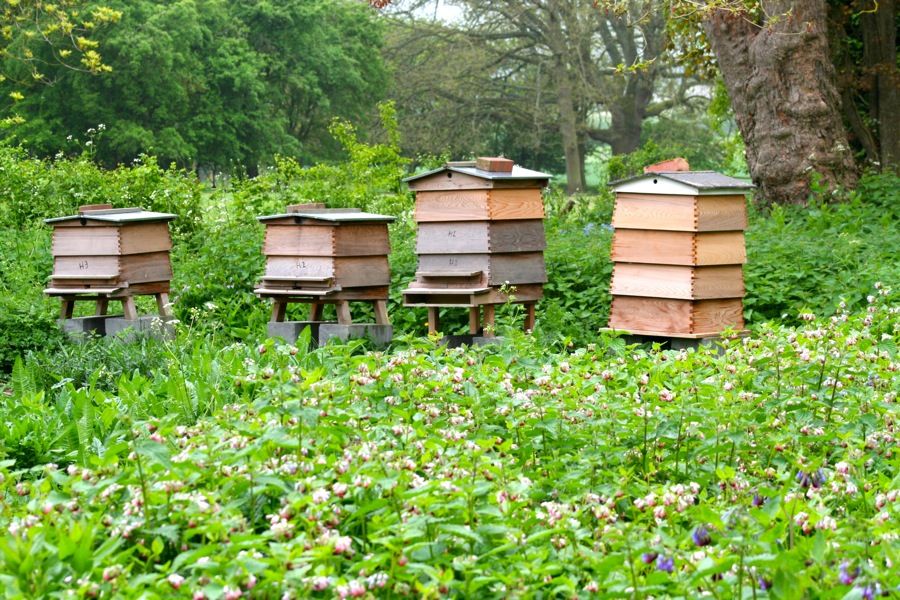
beesmoker_iStock_000001903738Small IMG_3442 IMG_6782 It’s simple really.  Avoid using chemical pesticides and herbicides – where possible garden organically, practice companion planting (more on that soon), use garlic sprays instead of chemicals and put up with a few imperfections on your fruit and veges as they did in the olden days! Naturally, this doesn’t stop the industrial scale spraying which is where the big problem lies, but if we all become aware and do our little bit to provide natural food sources, it all helps. Plant flowering plants wherever you can to provide food for bees in your garden.  Don’t deadhead until you absolutely must … I know the floppy old lambs ears are irritating, but the bees continue to feed on them for weeks and weeks.  If you are interested in keeping bees in your garden, and the thought of your own homemade honey sounds appealing, we will soon have a hive set up at The Potting Shed to show you the components required and we can order them in for you.

Here’s a link that will help you understand what’s involved. Meantime, next time you see bees in your garden, be aware of the huge problem that faces them worldwide, read up on it and go out and buy lots of honey!  Use it in place of refined sugar and smother it on your toast each morning to help keep the Australian bee industry strong.

Thought for the day.

IMG_9254“The true secret of happiness lies in taking a genuine interest in all the details of daily life.”
-William Morris

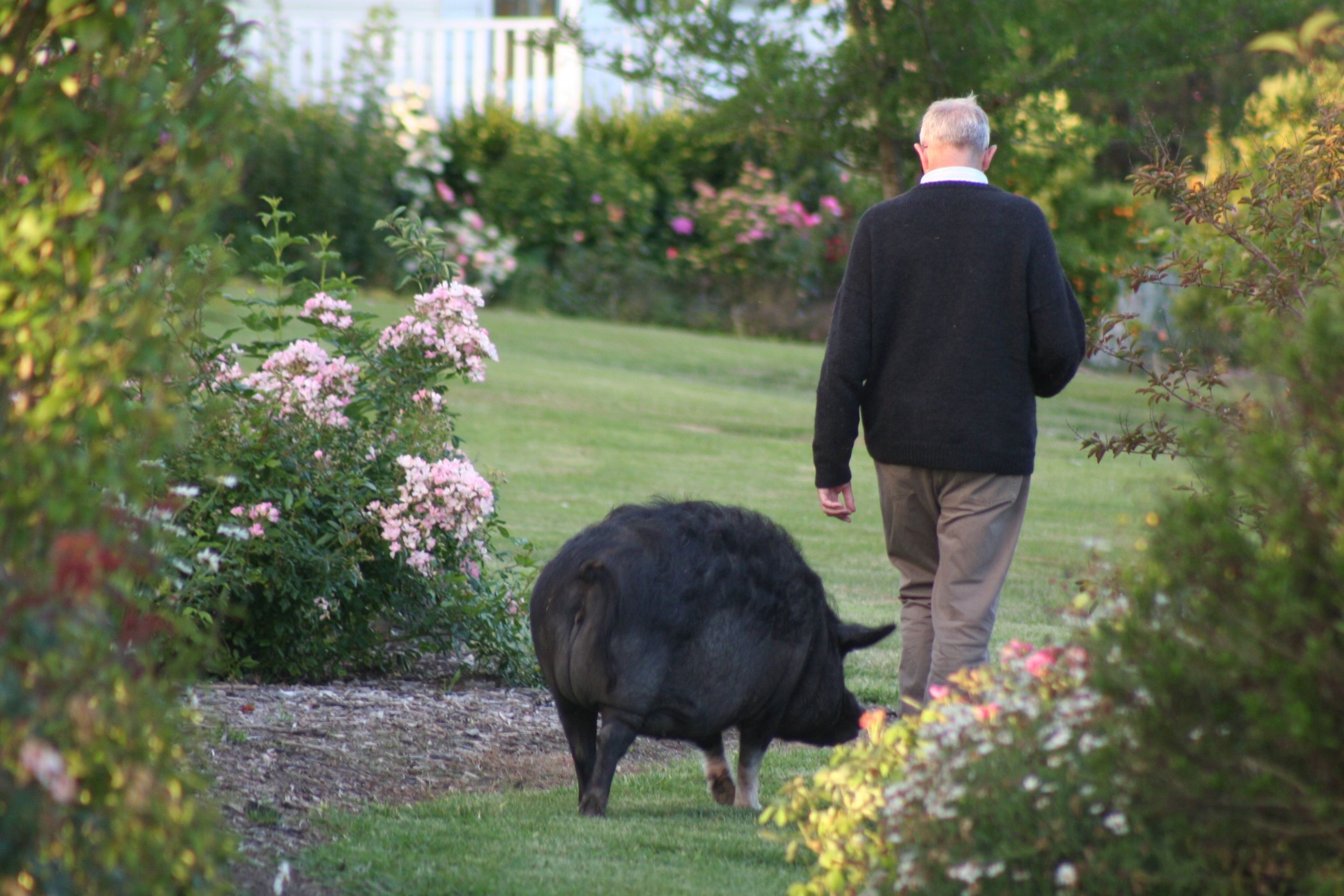
We never tire of the simple pleasure to be found in the morning ritual of walking the dogs  … and taking our wonderful pig,  ‘Pigley’ for a wander down to the pond for a wallow.  She loves a chat and relishes the company. Have a lovely weekend.  And remember to look for the beauty in everyday things. M x

A living gift.

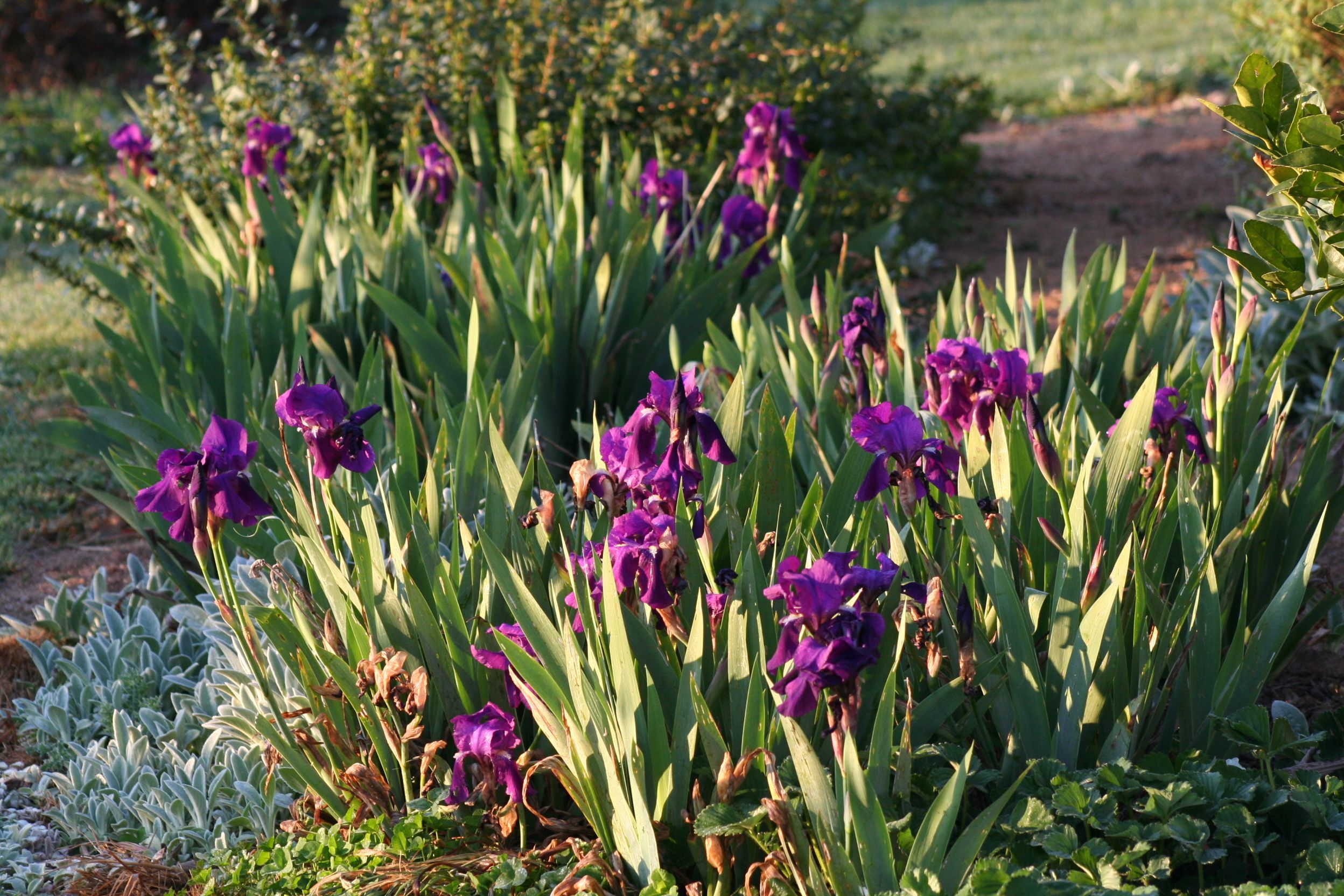
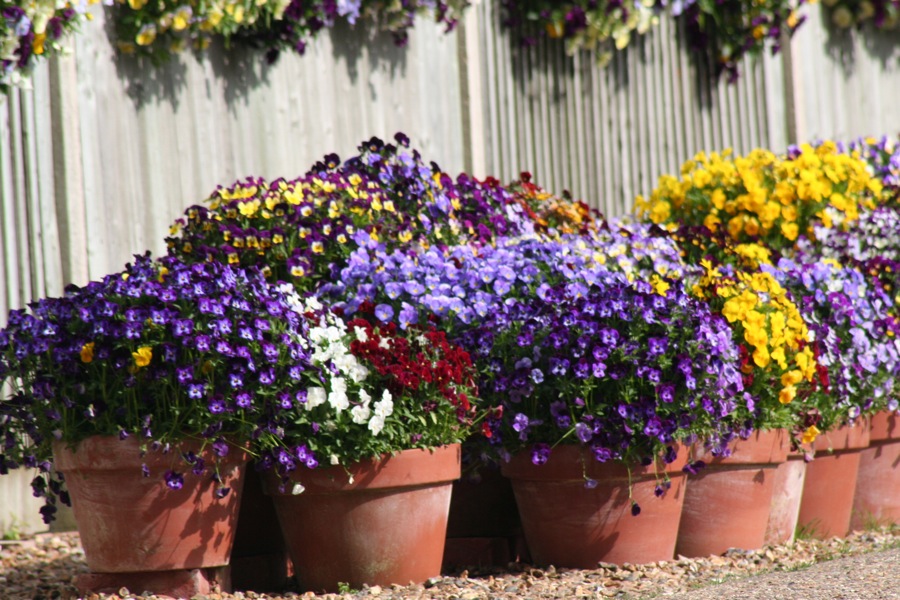
I’ve noticed a lot of people are popping in to The Potting Shed to pick up potted herbs or flowers to give as gifts when they visit friends or meet for lunch. It’s a lovely idea –  the gift lasts a long time and the pot can be filled again and again with some other treasure.  My garden is filled with plants given to me by friends – one friend in particular practically transferred her entire garden to mine!  Generous boot loads of treasure would arrive week after week, month after month as I started out creating our garden from a bare paddock and she simplified and streamlined hers.  Now, years later we enjoy beds of irises, borders of agapanthas, under plantings of ajuga, hellebores and violets, drifts of catmint, paths bounded by daffodils, hyacinths and tulips,  wonderful blocks of euphorbia, penstemons, salvias and scabiosa, orchards of citrus and barrels of rhubarb all started out from bags and boxes and snippings and clippings of these gifted plants.  Another lovely friend and neighbour gave me, some years ago, another type of living gift … a basket of heirloom varieties of garlic she had grown, harvested and labelled.  Not only was it delicious, I kept a clove of each and planted them and I’m still harvesting them year after year.  One needn’t spend a lot of money on a gift … just a little thought … and time. And that gift keeps on giving for years and years and years. How perfect is that! _MG_4547

IMG_4556

IMG_5862 IMG_5927 IMG_5931 IMG_5932 IMG_6112 IMG_6118 IMG_6120 IMG_6164 IMG_6166 IMG_6301 IMG_6358

More is more …

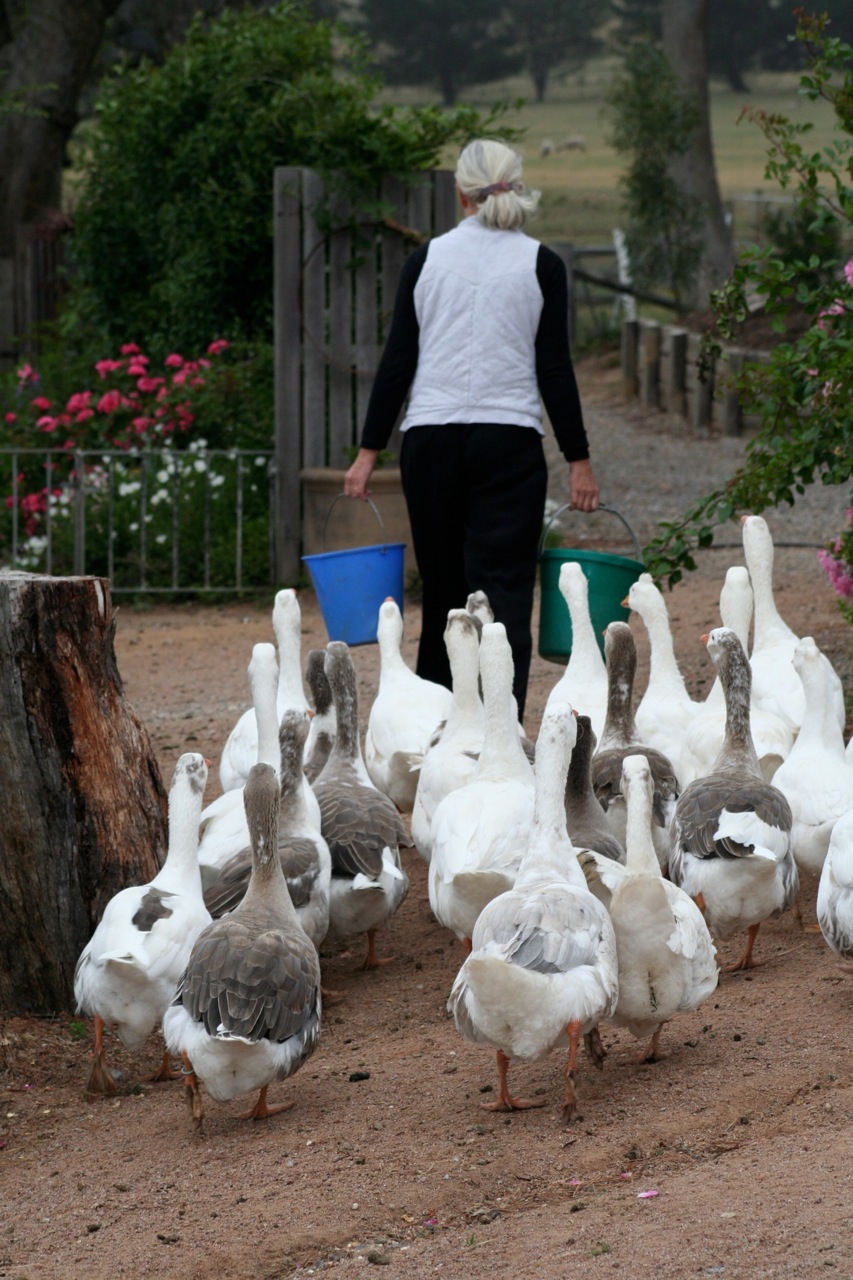
I know the phrase ‘less is more’ is the catch cry of the fashionistas and stylists … and in fashion that generally is true.  But in the home and garden I say ‘more is more’!  More roses, more peonies, more trees, more hedges, more art and books, more gorgeous things to beautify our lives.IMG_5747_3On our farm we have, amongst lots of other things,  32 geese and some of my friends say I should reduce the numbers to lessen the workload … but I can’t agree.  To see them all take flight and land on the pond in a flourish of shimmering beauty is a sight to behold … their silhouette in the late afternoon as they come through the pines, and the river of white as they wind their way through the orchard gate each night to be fed is so very lovely. Much more spectacular than say 5 or 6 geese.  They add movement and interest to the garden. Plus,  they keep our sheepdog Sam amused!  Every day he wakes me at dawn to let his geese out.  He loves them and swoops excitedly about as they exit the yard into the orchard.  He rounds them up all day long splitting them into various groups, regrouping them, dividing them, herding them.  It’s funny and uplifting to watch.    It’s the same with gardening … one or two of anything looks lonely.  If you can, go for mass plantings.  Even if you have a courtyard garden, be bold.  Better to have lots of one thing than a little, meagre smattering  of lots of different things. And repeat the same plant or plantings throughout to bring continuity and settle the eye. Just as lots of one style of plants looks better, so too does a story of similar pots, or matching barrels. So if in doubt, choose a style of plant you like and say to yourself “more is more”!IMG_1448_2

IMG_63179922061648531824_PCyd4D3J_f 215398794647337644_npc2jocx_f 280489883012962999_oe2sRgzH_f bannerman-4 IMG_1805 IMG_1863 IMG_6711

“Show me your garden and I shall tell you what you are.” Alfred Austin

Earlier this summer my friend Bridget invited me to see her parent’s garden in Canyonleigh. I knew from her expression that I was in for a treat, but nothing prepared me for the scale and size and beauty that was in store.  From a bare 10 acre paddock, Susan and John Carter have created an amazing oasis – a paradise.  19 years of love and inspiration was spread out before me. Kilometres of pathways wind through covered walkways, avenues of birches and maples, trees and hedges of every kind, arbors of wisteria, dramatic hedges of Rosa rugosa Scabrosa, and this (below) outstanding camellia walk shaded by trellis and trained into tiers of loveliness.  How absolutely stunning.  I raced home inspired and filled my notebook with sketches of new plans for projects to add excitement and interest to every corner of our ever expanding garden. You see a garden should not be a static place … it is a living, breathing thing and you can do with it what you wish. We are all constrained by budget … but let’s never be limited in our imagination.   John and Susan are testimony to the magic that’s possible when you let your creativity run wild. And it is utterly lovely and inspiring. Note: Though they will be babies compared to the lovely example you see below, we will be receiving this week, quite advanced espaliered camellia on trellis …  so you might want to try your hand at creating your own Camellia Walk!

IMG_8504

IMG_8502 IMG_8501  IMG_8491 IMG_8489 IMG_8487  IMG_8482

IMG_8496

IMG_8484

IMG_8520

Note:  John and Susan Carter’s garden “The Burrows” at Canyonleigh  is open for inspections by garden clubs and also by appointment.   John is an artist who paints under his birth father’s name, Kirton. He established a gallery at The Burrows to showcase his extensive collection of works and it is also open by appointment. Visit http://www.johnkirton.com.au or phone 4878 9384 for details.

We all need more thyme!

IMG_3854IMG_8325

I grew up in Central Otago, New Zealand where the rugged hills around Alexandra are covered in wild thyme.  I remember as a child picking rosehips in the summer with my mother, and we would trample over the rocky slopes where the thyme grew and the aroma of the crushed herb would follow us as we walked.  So the smell of thyme always takes me back there. When my mother died, one of her close friends, completely unaware of that childhood memory,  sent me in the mail a little gift – a simple sprig of thyme mounted and framed, handwritten below was Thymus vulgaris and on the card a note saying “I thought your mother would like you to have this”.  How extraoardinary. It hangs in my kitchen and makes me feel my mother is always close by.  It is one of my most valued possessions. Years later, on another trip back to NZ, my wonderful cousin Marie booked a lovely surprise – an afternoon horse-riding through the hills overlooking Clyde. All along the way, the horses hooves crushed the herbs underfoot filling the air with that beautiful aroma. It was sublime –  the smell of horses, the creak of the saddles, the spectacular view … and the thyme. That’s what could be called aroma therapy on an intense level!   Thyme is a species of flowering plant in the mint family Lamiaceae, native to southern Europe from the western Mediterranean to southern Italy. If you don’t already have it, plant some today in your garden. Or give some in a pot to a friend or daughter, or sister or mother.   It’s the loveliest thing to share. Thyme.

IMG_2473