Lemons are ‘gold’

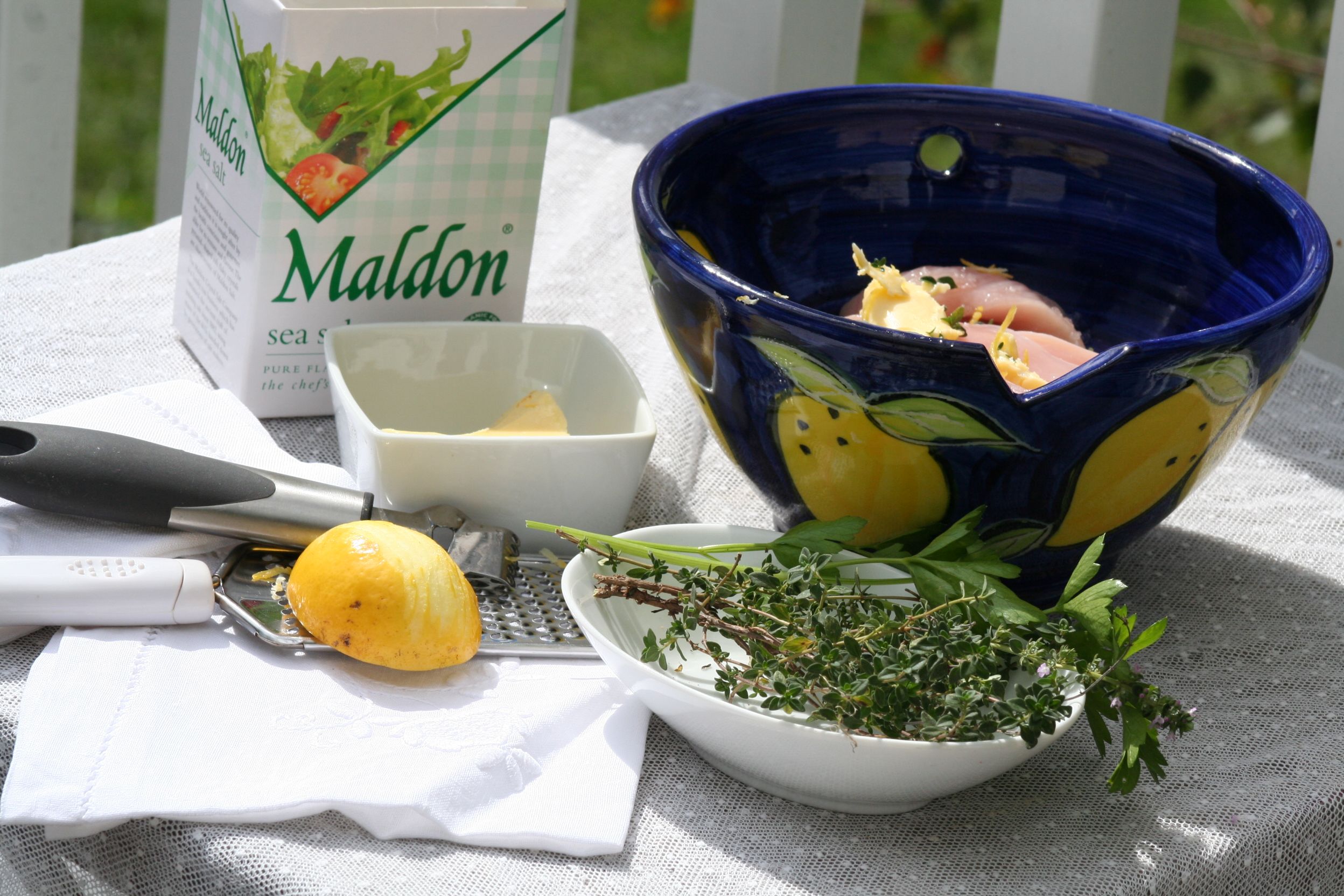
IMG_0580In spite of the very dry season, we have a bountiful crop of lemons and limes so I picked a basketful to decorate my shop and was setting them out when a friend came by for a chat.  “Are these organic?”, she asked.  Not certified, I explained, but picked from the garden that very morning, complete with snails and certainly free from any chemical fertilisers or sprays.  Grown in the old duck yard, they thrive on the naturally rich soil.   “Did you know organic lemons are almost impossible to buy”, my friend said.  “They’re $16.95 a kilo at the Health Store because of the shortage so these will sell. They are gold!” she laughed. I wasn’t actually planning to sell them, but if there’s a shortage, why not!  So if you’re looking for beautiful fresh, home-grown lemons come by The Potting Shed and pick up a bag.  As we have several very prolific trees in our garden, I use them a lot in cooking – a lemon fresh from the tree is so completely different in flavour to those on the supermarket shelf. They’re particularly useful for a quick little lunch of chicken tenderloins, tossed in lemon thyme, butter, lemon juice, a splash of good olive oil and lemon zest.  Quickly on the grill and onto grilled rye or focaccia with fresh rocket.  Yum. We’re expecting a shipment of espaliered lemons, limes and cumquats this week at The Potting Shed.  Can’t wait to see them.  So perfect for courtyard gardens.  IMG_3041IMG_3045

IMG_3048

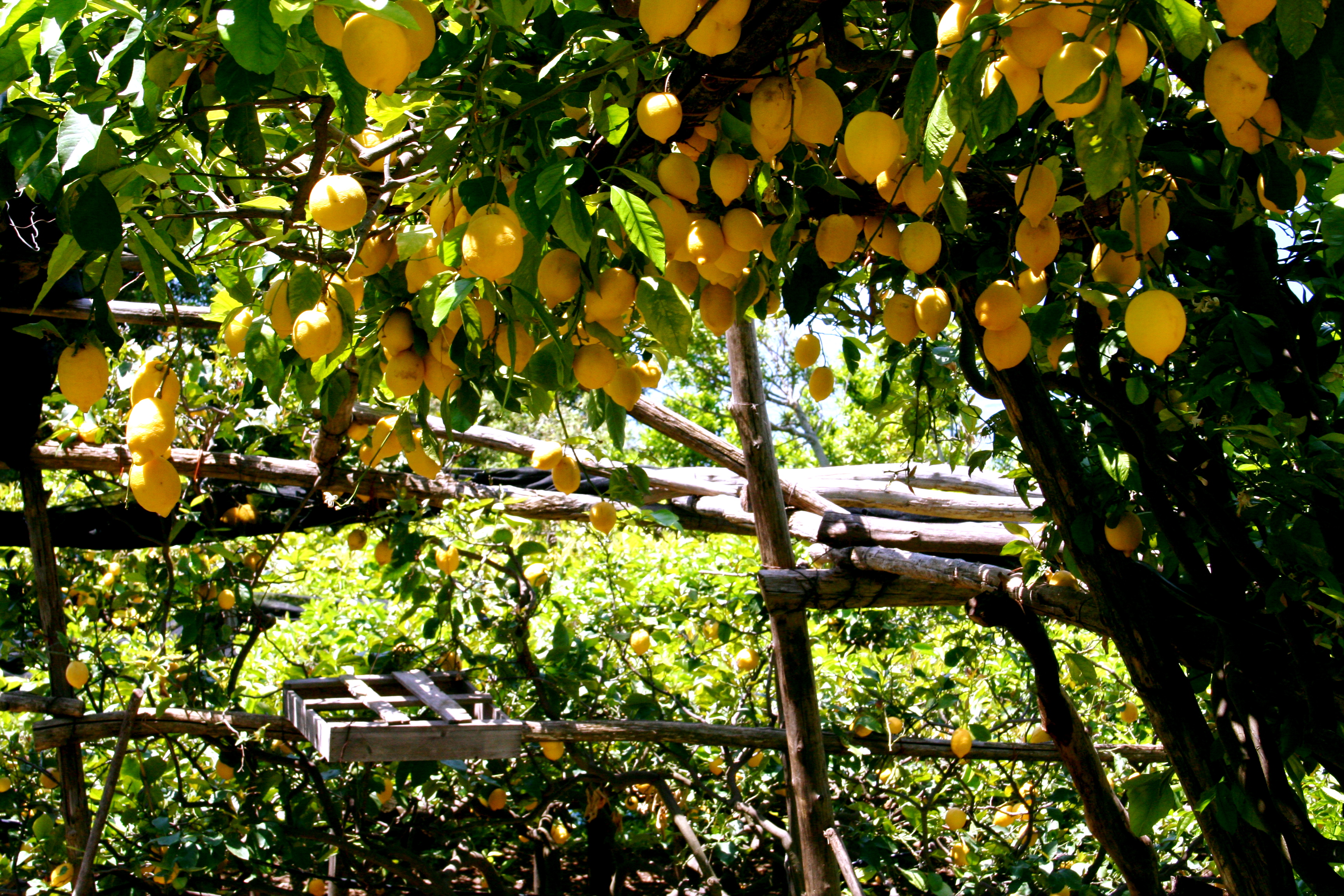
IMG_0661Above: Lemons in Positano.   Years ago I was a guest of my dear London friend Paul who had rented for his fortieth birthday an ancient, stunningly renovated fortress on a cliff overlooking the Amalfi Coast.   To get from the carpark to the villa below, we had to walk down a series of terraces all trellised with lemons.  It was magical –  the combination of the hot, mediterranean summer air, the breathtaking views of the coastline and the perfume from the sun warmed lemons which hung down like thousands of tiny  yellow chandeliers!IMG_0658 IMG_0660 IMG_0666

Make a statement with topiary

IMG_9794 Marqueyssac_2

Last week I visited a wonderful gardener who had invited me to view her collection of topiary.  She had been cultivating and nurturing it for 16 years.  Through the gate and down a rustic path, there, nonchalantly scattered about in her field, amongst giant gums and grazed by sheep (who won’t touch buxus as it’s toxic to stock), were box topiaries in artful groupings like little families or gatherings of friends.  They were absolutely charming in this unexpected and natural setting.  Mary had clipped them in various shapes over the years as her children grew up but now felt it was time to let them go to another home.  “You can’t sell them”, I protested. “They’re like family members! You will miss them if they go.”  But no, the artist now in her seventies was tired of the annual pruning and maintenance and wanted to move onto other things.  So I am planning to adopt them all, one by one, large and small,  and bring them to The Potting Shed for all to enjoy – and to take away to new homes to be admired and loved.   The visit emphasised how such a simple process of planting a shrub or tree and adding creativity, can produce such an outstanding result.  I’ve featured the Marqueyssac gardens (above and below) in an earlier post, but think it’s worth revisiting appropos this story. Years ago we travelled through the Dordogne region in France but were in those days, unaware of the marvellous gardens of Marqueyssac. What a shame to have been so close but to have missed seeing this spectacle.  Next trip we will certainly be adding it to our list.

Above and below:  The remarkable gardens surrounding the Château de Marqueyssac in Vézac,France.  Classified as a remarkable garden by the French Ministry of Culture, it was built in the 17th century by Bertrand Vernet, counsellor to the king. The original garden was created by a pupil of André Le Nôtre, and featured gardens, terraces, and a kitchen garden surrounding the chateau. A grand promenade one hundred metres long was added at the end of the 18th century. Beginning in 1866, the new owner, Julien de Cerval, who was inspired by Italian gardens, built rustic structures, redesigned the parterres, laid out five kilometres of walks, and planted pines and cypress trees.

Marqueyssac_1

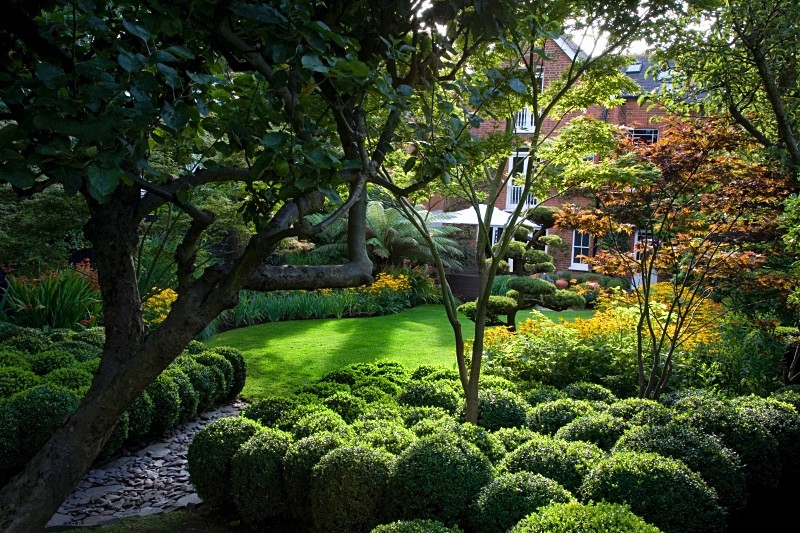
Clipped BoxAbove:  Photographer Steve Wooten captures the light and shade of this lovely English garden with it’s topiaried yew in the lawn and a bed of buxus balls.

Mad about rhubarb

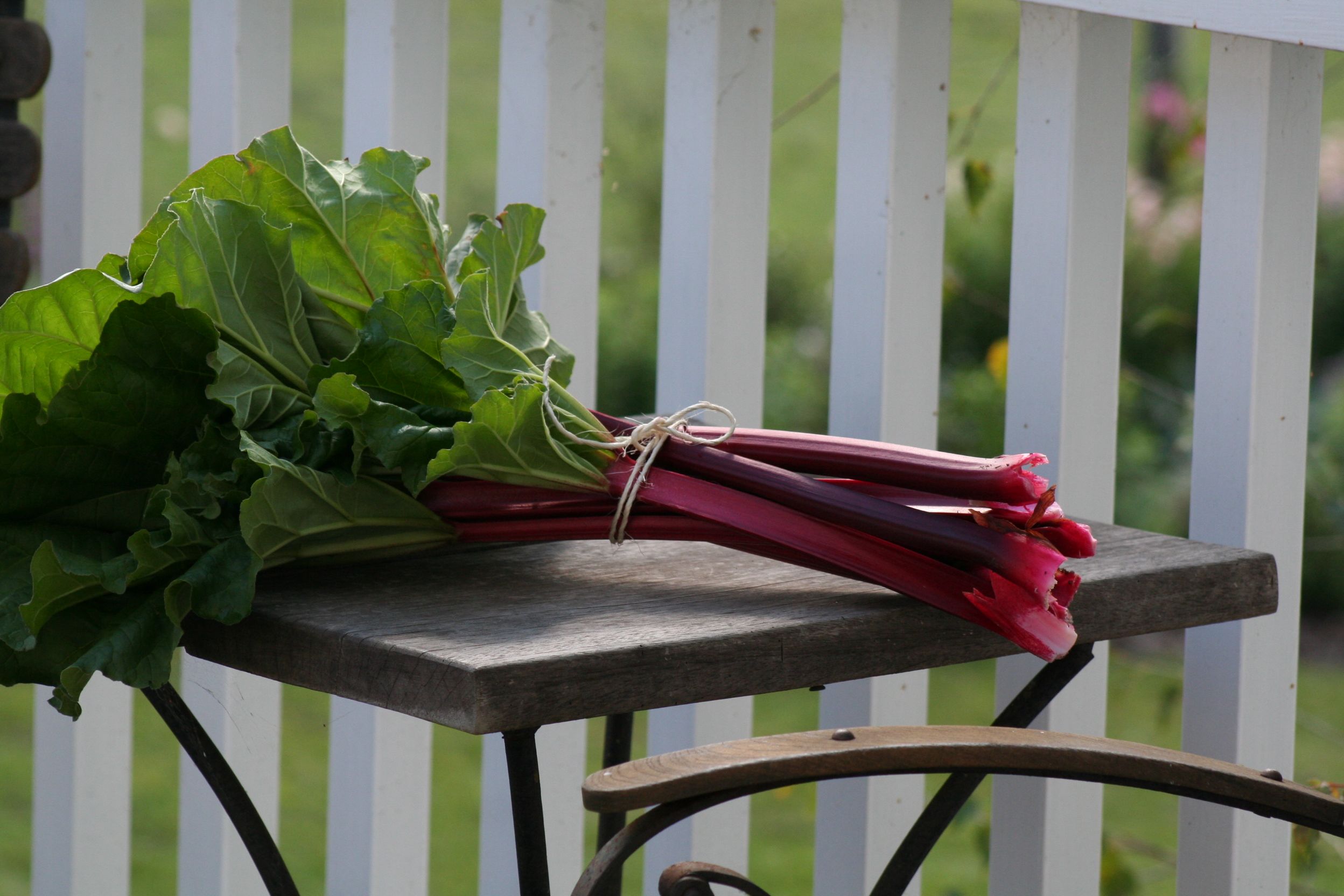
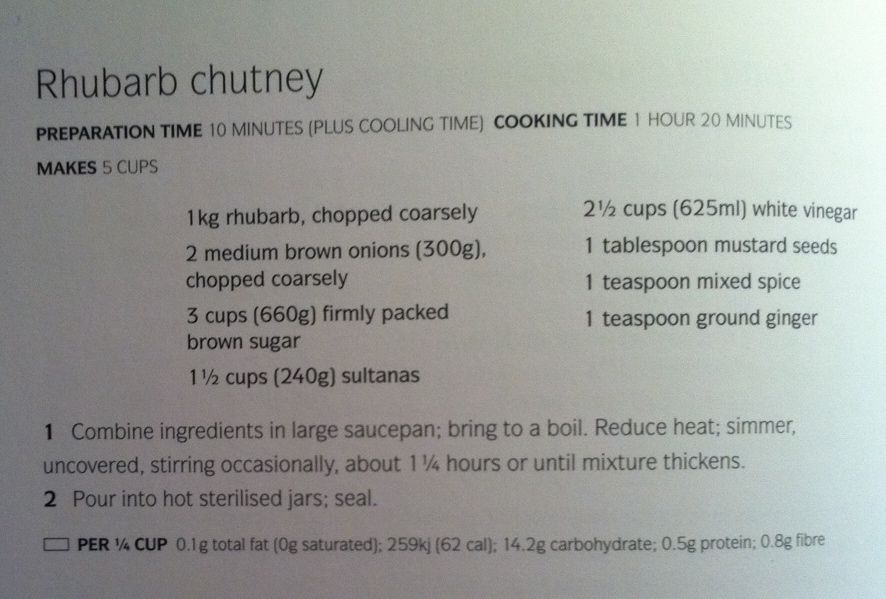
I love rhubarb.  I think it’s very underrated.  In my garden it forms little hedges around the vegetable gardens to break the wind and provide shelter for vegetable seedlings.  After a searing heatwave, the recent rains have catapulted everything in the garden into life.  And the rhubarb was one of the quickest to return.  It’s now lush and fat and our delicious, vibrant red variety Ever Red is powering along. It’s always a nice gift to take to friends – just pull off the stems and bind with string or raffia. We have pots of it available at The Potting Shed so if you’d like to add this easycare, delicious fruit to your garden come in and pick up a pot.  I’ve included a delicious Rhubarb Chutney below for you to try and I have a friend who makes a delicious Rhubarb Champagne every year for the Christmas  season so I will endeavour to get that recipe for you also.  Meantime, happy gardening!  IMG_3025IMG_3027 photo Scan 6

Rhubarb (Rheum x cultorum) is one of the few perennial vegetables and will produce tangy, juicy stems season after season. Rhubarb is native to Siberia and the Himalayas and was cultivated for medicinal purposes long before its culinary properties were discovered. Its first appearance in English recipes was well into the 1700’s, taking at least another hundred years to reach popular acceptance. Growing rhubarb is simple and the plants require little maintenance. Rhubarb is grown from fleshy crowns or seed, the crowns being the quickest and easiest method. The crown is a section or divided part of the plant with roots attached. These crowns are found in nurseries during winter to early spring and should be planted in soil improved with some home made compost to give juicier stems. If you have clay soil create raised beds to improve the drainage and if you have sandy soil add a lot of organic matter so that it doesn’t dry out too quickly in summer. Plant the crowns 75 cm to 1 metre apart to allow for large stems and leaf growth. The crown should be planted with the growing point at or just below the soil surface, watered and then mulched with straw. They love well rotted manure but won’t need this immediately, save it until the end of the first growing season, then lavish it on to get them ready for the following spring. Don’t let the plants dry out in summer, keep them well watered, as if the stems get dry they will never get juicy. However, the soil should not become waterlogged.

Plants raised from seed usually take three years before they’re ready for harvesting. Plants from corms can be harvested the first summer or left until the following summer if not quite ready in the first season. When harvesting rhubarb don’t cut the stems, just pull gently from the crown. Never strip a plant of stems totally because this will exhaust them of stems for the next season’s growth. To avoid rhubarb running to seed, avoid light overhead watering. It is best to thoroughly water infrequently. Apply lots of high nitrogen fertiliser in a solid or liquid form in spring to autumn. This will discourage flower growth. If flowers do appear, remove them and take extra care with feeding and watering. Every four or five years dig the plant up and divide the crowns for replanting.

The stems must always be cooked before eating as the raw state is indigestible. The leaves are toxic so never eat them or feed them to your chooks however the leaves are quite safe to add to your compost pile. Some varieties have red stems like Ever Red whilst others have green stems like Victoria. The green stemmed varieties are just as reliable and tasty as the red, but sometimes not as sweet. Rhubarb is low in kilojoules, high in vitamin C and calcium and has a moderate iron and fibre content. It was once used as a mild laxative. Never cook rhubarb in aluminium saucepans as the oxalic acid in the stems dissolves the protective layer normally found on these saucepans, forming a poisonous compound called aluminium oxalate. Stems can be stored for up to five days in the fridge or frozen in small pieces. Before freezing, heat in boiling water for 1 minute, rinse under cold water and drain. Rhubarb can be used in desserts, jams and wines and the leaves can be made into an aphid spray.

Time to plant tulips

tulipa_blackparrot

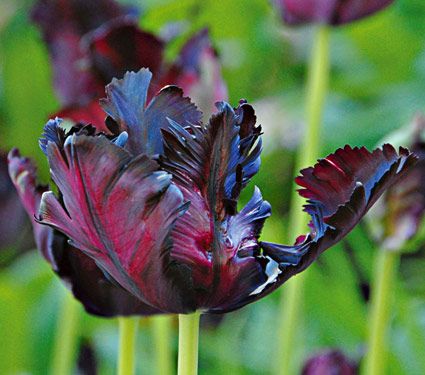
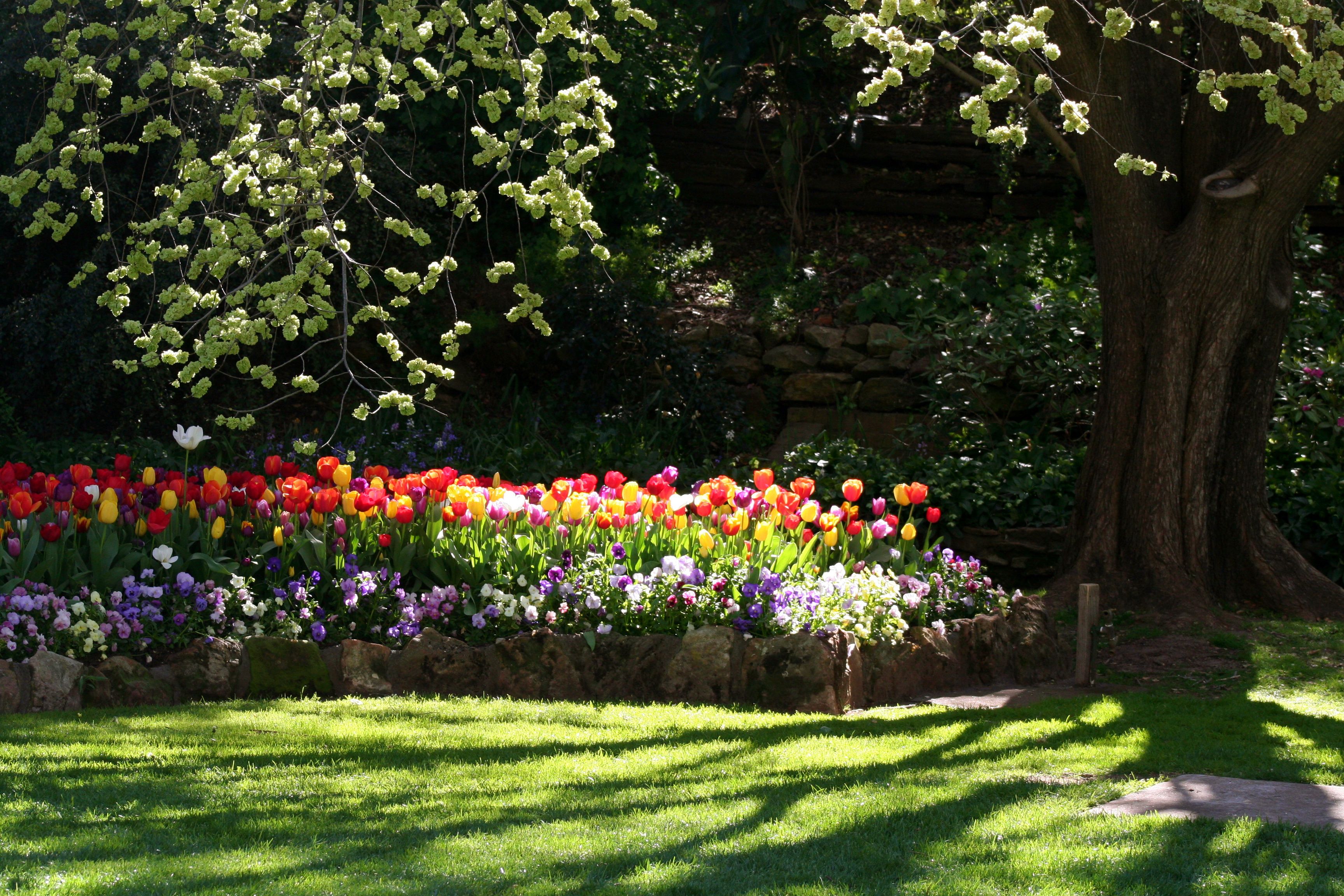
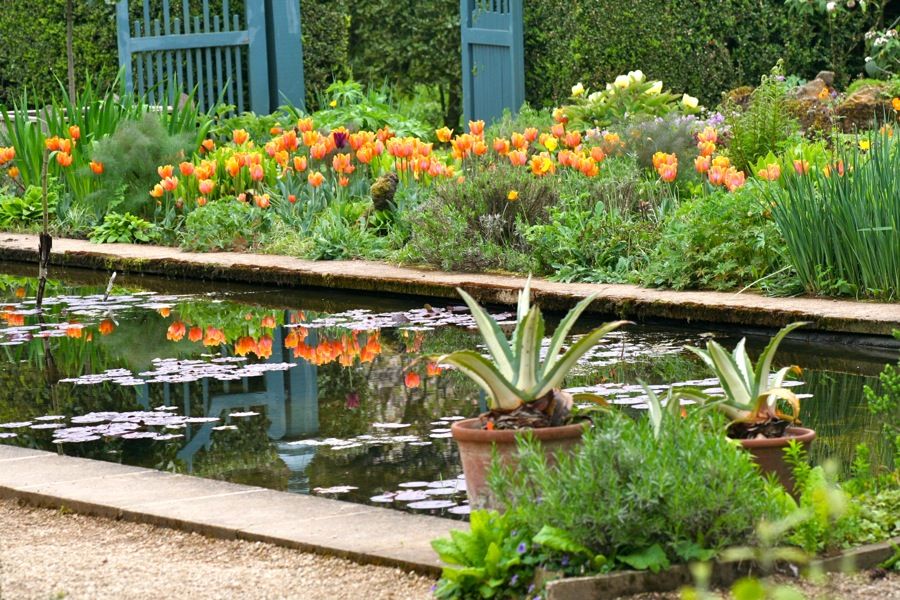
I can’t wait to take delivery of our tulip stock this month.  Late March is the time to plant for a spectacular Spring display and don’t be meek … go for drama. Not 8 or 10 … no, no, no … 80 or 100!   I was inspired by displays at Hidcote last year where giant troughs and tubs were packed with bulbs of a single colour.  And I’m planning to lash out and do a bold display of the spectacular Tulipa Black Parrot (above).  Bred in 1941 this magnificent tulip has violet black flowers and grows to approx. 50cm. Tulips in the Parrot class have feather-like flowers with some varieties having petals more incised than others. Parrot tulips tend to have large, heavy flowers and in the sun, the flowers open up horizontally. They are generally late flowering so be sure to have other earlier varieties to start the show and keep Black Parrot for the grand finale!  For those of you who live here in the Southern Highlands, tulip time co-incides with lots of Open Garden visits.  How lucky we are to have such lovely displays in our public parks and gardens.

IMG_3783 IMG_3813 IMG_6845 IMG_6852 IMG_6857 lifecycle

Growing Instructions – Tulips should be planted in late March – May, in full to partial sun. March planting is only for zones 1-3, (see map below) May for Zone 4. Once buds appear, a little complete fertiliser can be mixed into soil, and a high nitrogen topdressing should be applied at emergence. Water in as bulb is shooting, and water well after flowers die off to ensure good bulb growth for next year’s flowers. Lift bulbs when foliage is yellowed, and store in net bag in ventilated, cool area. Flowers in spring.

gardening_zones_aust

Refrigerating Tulips Tulips love a cold winter, a mild spring and dry summer. You can’t control everything about your climate but you can control the winter period quite easily. If you live somewhere that doesn’t get any winter frosts your ground does not get naturally cold enough for tulips. You will need to give them a winter before you plant, this can be done by putting your bulbs in a fridge for about 6-8 weeks before planting. If growing in warmer climates planting is best in mid May so put into the fridge mid-late March.

Things to remember about putting bulbs in the fridge

1.Don’t freeze them 2.They need air flow around them. 3. Open the paper bags. 4. Store away from ripe fruit and vegetables. 5. They will grow taller, and flower earlier as a result of refrigeration, and this effect is cumulative.

In warm climates tulips grow well as annuals. Plant the bulbs up in large pots in late May after 8 weeks of refrigeration and put the pot in the coldest part of the garden (no sun) until the shoots are 5 cm high. Then move the pot to your favourite position and enjoy the spectacular growth and flowering of these energetic bulbs.

Great books for further reading on Tulips:

Intrigue, thievery and heart break… it’s all in the history of the Tulip

The history of the Tulip is filled with intrigue, skulduggery, thievery, instant fortunes and broken hearts. And, although these flowers are synonymous with the Dutch, tulips did not originate in the Netherlands nor were the Dutch always at the forefront of breeding these beauties. The Dutch obsession with tulips belongs to the relatively recent history of the tulip. The attempts to trace the exact history of the Tulip have been thwarted by a lack of reliable documentation over the centuries although art from as early as the 12th century does give some clues.

What historians have been able to establish is that tulips probably originated thousands of years ago in a ‘corridor’ which stretches along the 40º latitude between Northern China and Southern Europe.

Ornamental Kale will add glamour to your winter garden

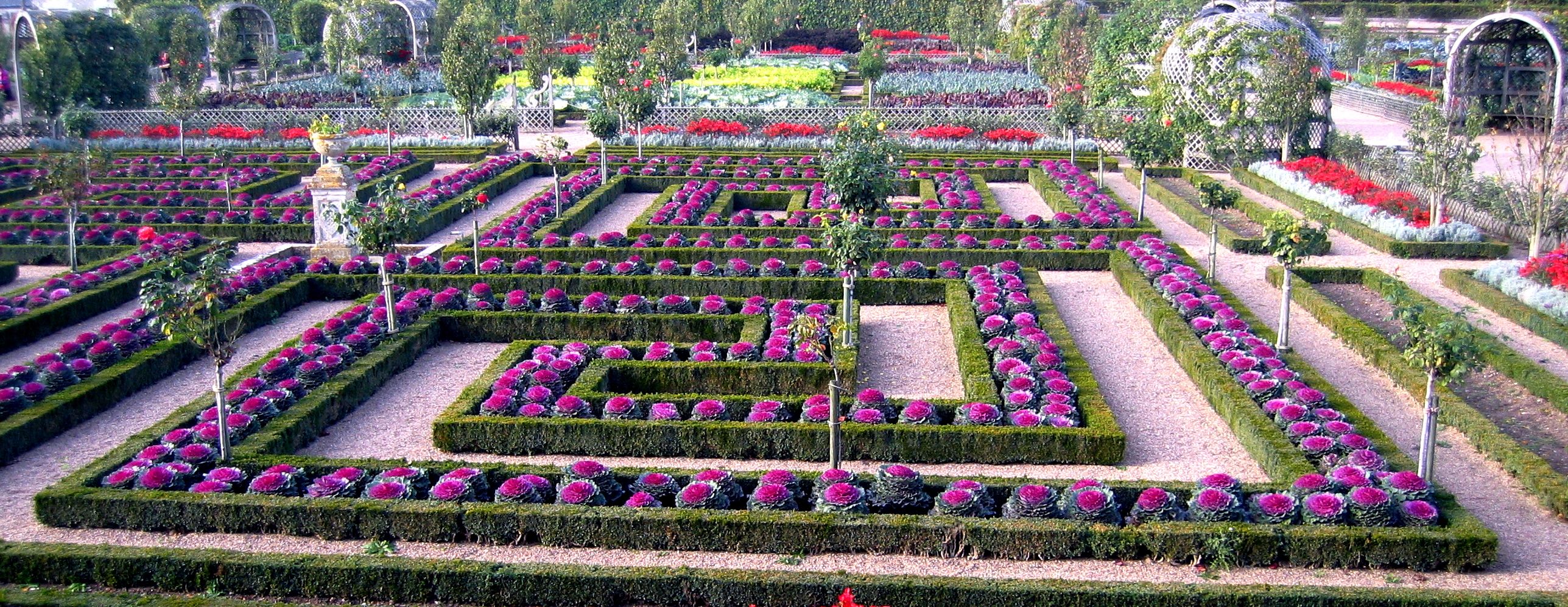
 On a trip to France a few years ago, we visited the remarkable Villandry gardens in the Loire Valley.  What stood out for me, amongst the many other wonders in this, the world’s largest jardin potager, was the spectacular ornamental kale.  Row upon manicured row of this beautiful vegetable, curated into an art form amongst a sea of other vegetables elevated from the vege patch to the catwalk!  So I have ordered lots of it for The Potting Shed – knowing that whatever doesn’t sell will go straight into the garden at home.   One fellow enthusiast came in today and snaffled a tray full, so if you’d like some seedlings to add panache to your garden this winter, be quick.  I have a feeling they won’t last long!  I’m also looking for ornamental cabbage which I saw in many villages in France in Autumn (see picture at bottom)  which is another lovely accent plant for the cooler months. I’ll let you know when I have it in stock. IMG_4719 IMG_4723 IMG_4718

Culture Ornamental Kale is easily grown in organically rich, consistently moist, well-drained loams in full sun. It’s a  frost hardy plant that needs cool temperatures to produce best leaf colors. Here in the Highlands they are best grown in the cool temperatures of autumn, but may also be grown in early spring. If grown in summer (and they will), plants will need some afternoon shade to survive, but the foliage will not be as spectacular.  Plants also look fantastic grown in containers as is often seen in France.

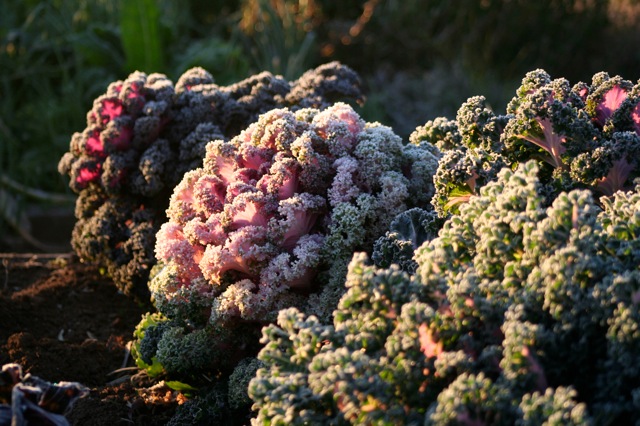
Noteworthy Characteristics   Brassica oleracea (Capitata Group), commonly known as cabbage, and Brassica oleracea(Acephala Group), commonly known as kale, are cool weather vegetables that are grown for harvest of their edible leaves. Cabbage forms heads and kale forms upright leaves. By contrast, ornamental cabbages and kales are grown primarily as foliage plants for their intensely coloured leaves rather than as vegetables. Ornamental plants were developed for ornamental use without regard to taste. Ornamental cabbage typically develops large rosettes of broad flat leaves and ornamental kale typically develops curly, ruffled leaves in a tight rosette. Leaf colors are usually quite showy, including white/cream, pink, rose, red and purple. Plants will grow to 12-18” tall and need the cool weather of spring or autumn to develop their best foliage color. As night temperatures drop during the autumn, the leaf color typically darkens and intensifies. Cabbage and kale are in the same species as a number of other cool season vegetables including Brussels sprouts, broccoli, cauliflower and kohlrabi.

Garden Uses  Mass plantings. Border fronts. Edging. Containers. The colorful leaves make an attractive food garnish and if you pleach their trunks, they make great cut flowers_MG_7612IMG_4373.

Pansies are ‘in’

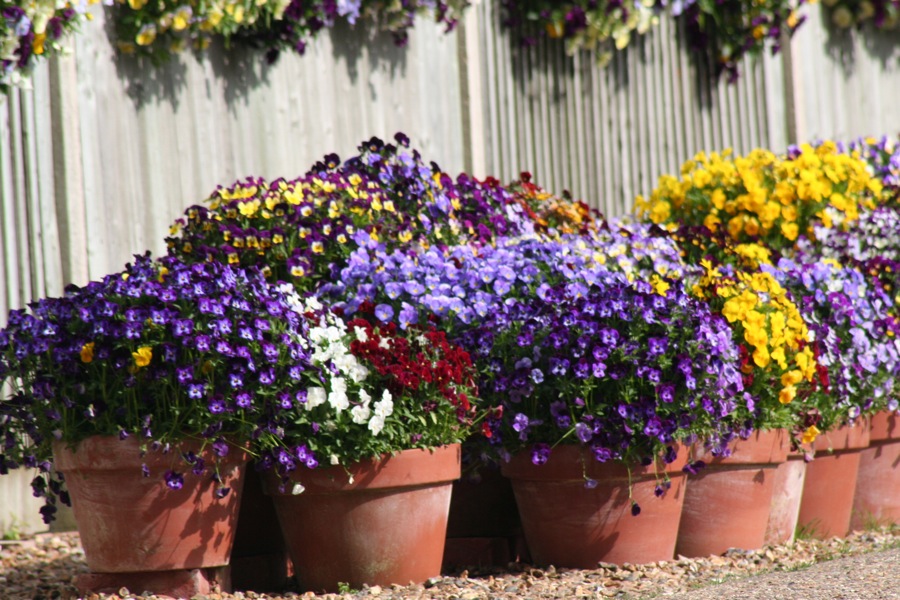
I personally don’t think pansies were ever ‘out’ … but they are now definitely ‘in’ fashion.  I love them. Masses of them.  We have lots and lots of them in stock at The Potting Shed and they will cheer you up through the cooler months when everything else is asleep. Pansies can be grown in the garden or in pots, hanging baskets or window boxes. They like a sunny spot through the cooler months but in warm areas (Sydney to Perth and north) light shade in spring and early summer will mean they keep flowering longer. Prepare the soil  well before planting by digging in compost and aged manure.  Liquid feed regularly and pick the flowers, or deadhead them to keep plants blooming. Plant seedlings in autumn for winter and spring flowers. In cooler climates delay planting until late winter, for a summer flower display.IMG_6711

A few early photos from The Potting Shed

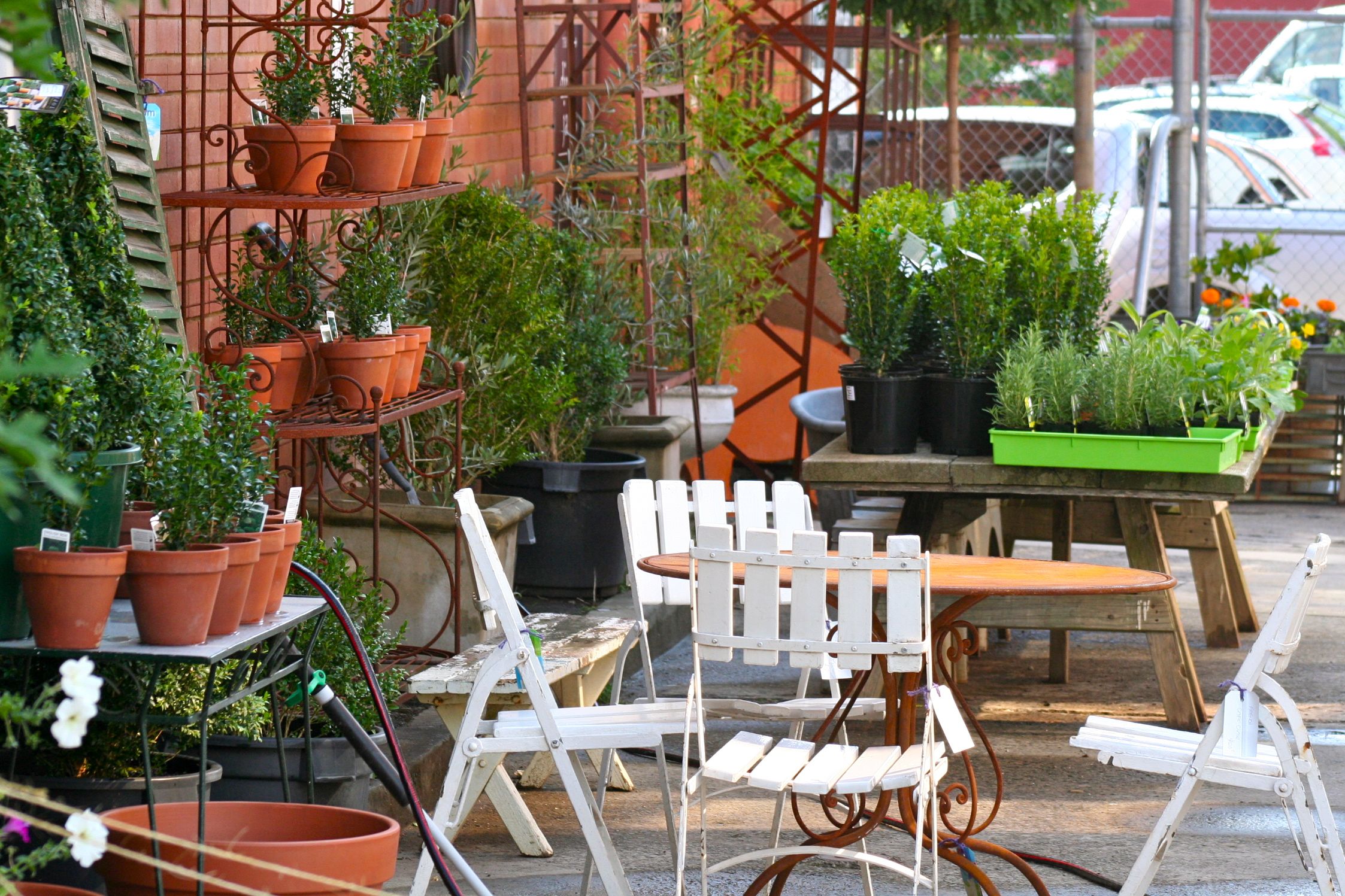
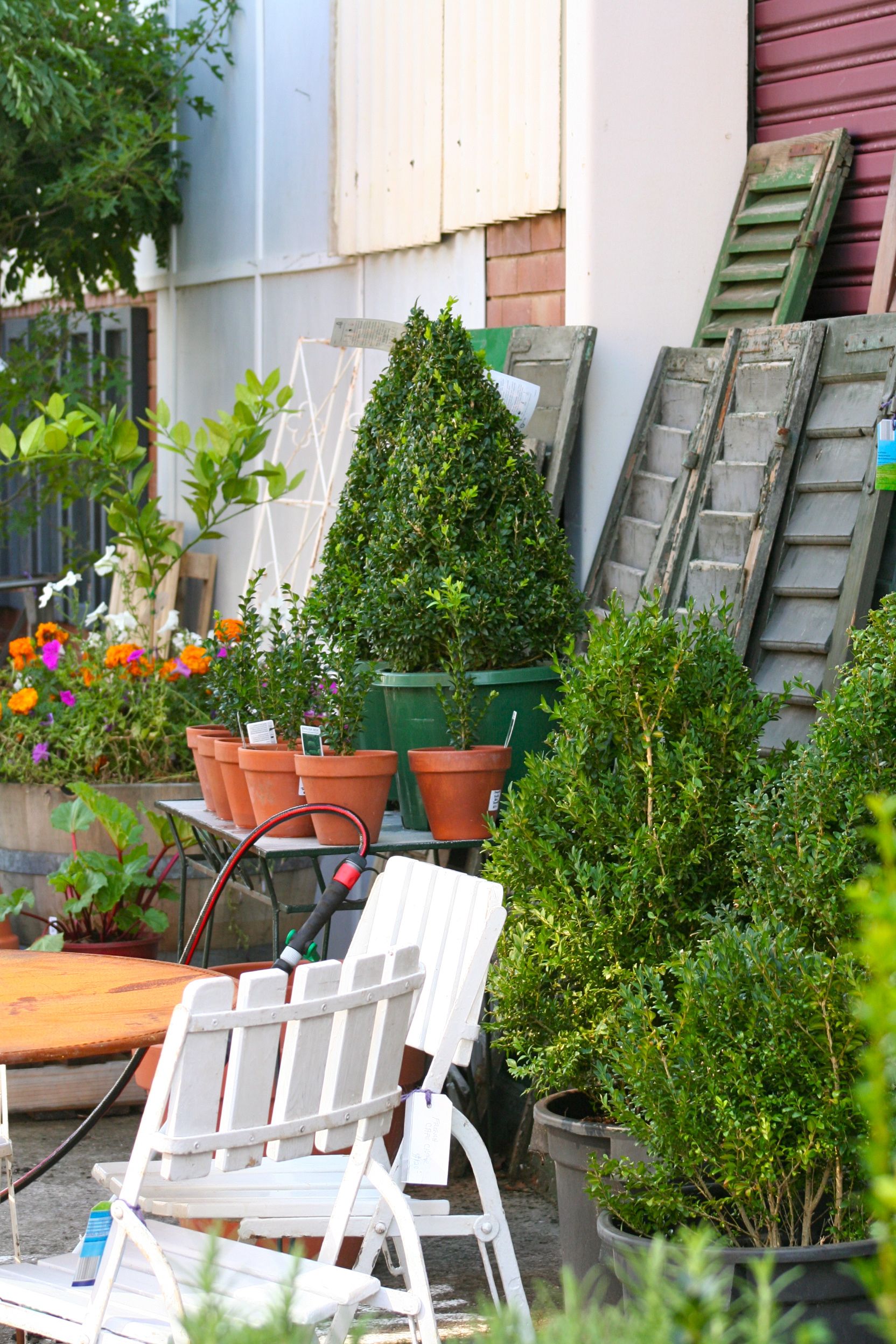
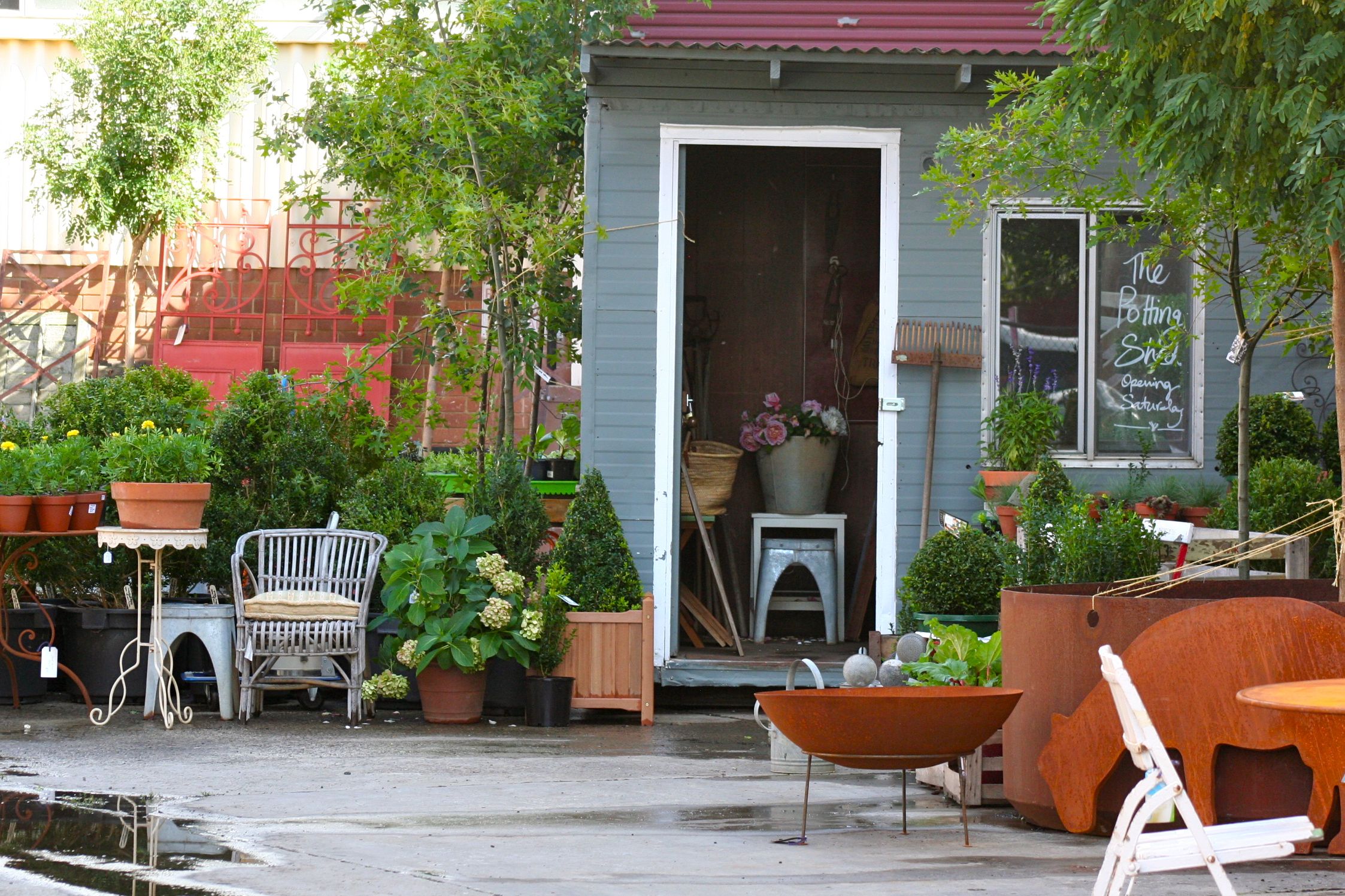
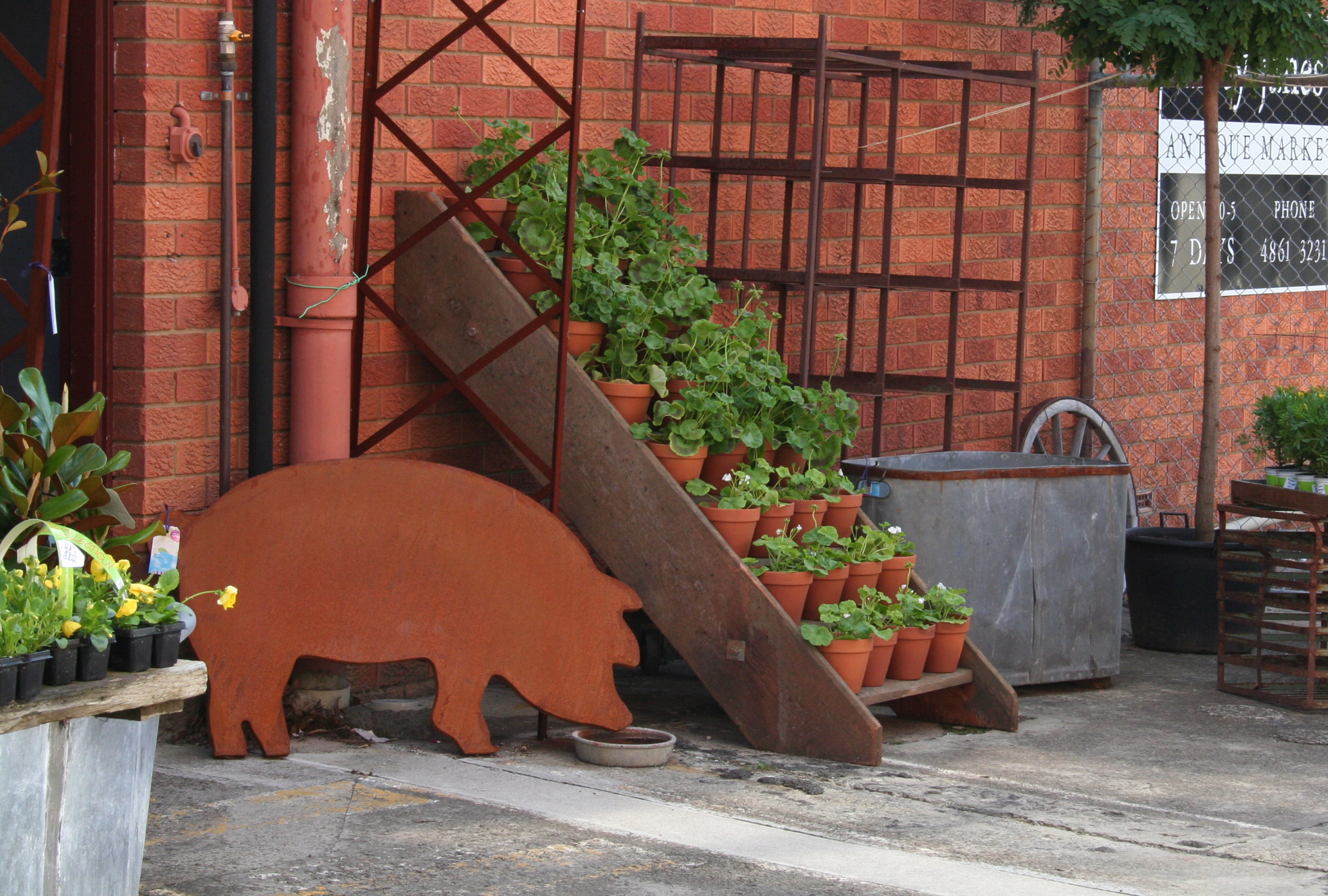
Well, we’re a long way from being fully set up but we’ve had lots of requests for photos of the shop …  so here are some early snaps taken during setup over the past few days.  We have a lot more stock arriving tomorrow and Friday so I’ll update this page when we have a bit more to show you.  Also  … there’s a new cafe opening next door in the Dirty Janes Antique Emporium on Thursday which is a bit exciting …  we’re setting up chairs and tables outside The Potting Shed so you can meet friends for coffee and have a browse around the 35 antique stands and, of course, pick up a few plants on the way!   See you soon.  Maureen xIMG_9791 IMG_9792 IMG_9794 IMG_9798 IMG_9802 IMG_9804 IMG_9805

IMG_9801

IMG_9787

Light is Fugitive

Good morning from The Potting Shed.  Yesterday I was given a lovely little stool to decorate my office and I promptly dressed it up with a big bowl of old fashioned roses from the garden.  It made me think of this beautiful picture by Laura Jones, which unfortunately was sold by the time I got to the exhibition opening recently.Image

What talent we have living here in the Highlands.  Laura resides in Exeter and her exhibition “Light is Fugitive” (from a quote by celebrated Australian artist Margaret Preston),  is on until March 21 at the gorgeous Gallery Ecosse, opposite the General Store. Don’t miss it.  Laura’s pictures of floral arrangements reflect her considerable skill as a trained florist and her masterful use of colour. She has taken the subject of floral still life and added a modern zing, a liveliness, a bold use of colour. The result is wonderful.  I dream of having one of Laura’s works hanging here in my little Potting Shed!

A love affair with clipped box

Image

After one of the hottest summers on record, I am more in love than ever with box. What a great plant it is.  While everything else in the gardening was flustered and scorched, my English, Japanese, Korean and Dutch box hedges and balls were powering along, cool and collected.  Here are some notes on how to care for your buxus.

  • Once established – buxus is drought tolerant – if potted keep moist.
    Buxus hate being over watered and soggy soil.
  • Buxus love a PH of 6.5 to 7.5 PH. They don’t like acidic soil. Use dolomite lime to neutralise the soil.
  • When planting – plant up to lower branches. They do not get collar rot. This eliminates gaps under your hedge.
  • When planting ‘bare rooted’ stock:
    • Plant deep – up to and including lower branches
    • Flood the roots with water – this eliminates air pockets – then water normally
  • Always cut hedges on a cool day with quality hand shears – electric or petrol cutters tend to rip or shred hedges – and hand shears generally give a cleaner cut.
  • Box loves chook manure or pellets. At least twice a year. If box hedges are going a bronze colour or yellow orange, check soil for too much water- or they may need a big feed of fertilizer and/or dolomite lime.

Today in my garden

apple_rain

The apples are bursting into life and I’m wishing I’d been more organised and ordered the heritage apples I plan to espalier around the fences enclosing the vegetable garden.  Now it will have to be next winter.  Inspired by the extraordinary orchard at RHS Wisley, I am planning an exciting display of old English and French cultivars.  First on my list was the famous Cox’s Orange Pippin which will fruit for the first season this year. It is widely regarded as the finest of all dessert apples.  Cox’s Orange Pippin  ‘Pippin’ is an old English word derived from the French word for ‘seedling’. The same word can be seen in the modern French for a plant nursery or garden centre – ‘pepiniere’. Like many old apple varieties Cox’s Orange Pippin was discovered as a chance seedling.  If you would like to research this further, here’s a link to the Heritage Fruits Society www.heritagefruitssociety.org.au/

About the Heritage Fruits Society

The Heritage Fruits Society is based in Melbourne, Australia. Their aim is to conserve heritage fruit varieties (also known as ‘heirloom fruits’) on private and public land.  They enable and encourage society members to research this wide range of varieties and to inform the public on the benefits of heritage fruits for health, sustainability and biodiversity.
You can read about their history here and you can find their list of heritage apples here.

A list of some of the Heritage/Heirloom apples you might like to consider from Petty’s Orchard in Templestowe, Victoria, Australia.  It is one of Melbourne’s oldest commercial orchards, and it holds the largest collection of heritage/heirloom apple varieties on mainland Australia, with more than two hundred varieties of old and rare apples. The maintenance of the apple tree collection is done by Heritage Fruits Society volunteers. Anyone can come and help. Find out more!

Petty’s Orchard Complete Heritage Apple Collection

Abas

Akane

Albany Beauty

Alexander

Alfriston Mother (=American Mother)

Andre Sauvage Antonovka Kameniohka

Atlanta

Autumn Tart

Baldwin

Ball’s Seedling

Barry

Bashfort

Batman’s Tree

Batt’s Seedling

Baumann’s Reinette

Beauty of Bath

Beauty of Stoke

Bec D’Oie

Bedford Pippin Cross

Bedfordshire Foundling

Belle de Boskoop

Belle de Magny

Berner Rosen

Bismarck

Blenheim Orange

Blue Pearmain

Bonza Boy’s Delight

Bramley’s Seedling

Breakwell’s Seedling

Brittle Sweet

Brown’s Apple

Browns Pippin

Bulmer’s Norman

Buncum

Butters Early Red

Carolina Red June

Cataignier

Cayuga

Cayuga Redstreak

Chandler

Cimetiere du Pays

Cleopatra

Climax

Coldstream Guard

Cornish Aromatic

Cornish Gilliflower

Cox’s Orange Pippin

Cox’s Orange Pippin Red

Cox’s Pomona

Cranberry Pippin

Crofton

Crofton Red

Dabinett

Delicious

Caldicott

Delicious Glen Vimey

Delicious Hi Early

Delicious Richared

Delicious Starkrimson

Democrat

Democrat (Black)

Devonshire Quarrenden

Dewdney’s Seedling

Discovery Doctor Hogg

Dunn’s Seedling (Monroe’s Seedling)

Duquesne

Early Victoria

Edward VII

Edwards Coronation

Eggleton Styre

Egremont Russett

Eldon Pippin

Ellison’s Orange

Emneth Early (=Early Victoria)

Esopus Spitzenburg

Esopus Sptizenburg

Fameuse (=Snow Apple)

Fenouillet Gris

Forfar Pippin

Forge

French Crab (=Winter Greening)

Freyberg

Frost

Fuji

Gala

Geante D’Exposition

Geeveston Fanny

Geoff’s Tree

George Carpenter

George Neilson

Gildering Sage D’espagne

Gladstone

Golden Delicious

Golden Harvey (=Brandy Apple)

Grandmere

Granny Smith

Gravenstein

Gravenstein Early

Grosseille

Hollow Crown

Holly

Hubbardton Nonsuch

Hyslop Crab

Ida Red

Improved Foxwhelp

Irish Peach

Isaac Newton’s Tree

James Grieve

Jaunet

Jerseymac

Jonagold

Jonared

Jonathan

Jonathan Red

Jongrimes

July Red

Keswick Codlin

Kidds Orange Red

King Cole

King David

King of the Pippins

King of Tompkins County

Kingston Black

Kirk’s Seedling

Lady Finger

Lady William

Lalla

Laxton’s Fortune

Laxton’s Superb

Legana

Lodi

London Pippin (Five Crown)

Lord Derby

Lord Lambourne

Lord Nelson

Lord Suffield

MacIntosh Early

Magnolia

Maigold

McIntosh Early

Melba

Melrose

Merton Worcester

Michelin

Minjon

Monarch Cross

Monroe

Murray Gem

Mutsu

Newtown Green Pippin

Nickajack

Norfolk

Northern Spy

Opalescent

Orange de per

Orleans Reinette

Ortley (=Cleopatra)

Peasgood’s Nonsuch

Pine Golden Pippin

Pittmaston Pineapple Fameuse (=Pomme de Neige)

Poor House

Potts’ Seedling

Prima

Prince Alfred

Prince Edward

Queen Cox

Quinte

Ranger

Red Astrachan

Red Delicious

Red Granny Smith

Red Winesap

Red Winter Pearmain (=Buncombe)

Reinette d’Angleterre

Reinette du Canada

Reinette Musque Rheinette de Macon

Rhode Island Greening

Ribston Pippin

Rokewood

Rome Beauty

Roundway Magnum Bonum

Rous La Tour

Royal Jubilee

Saint Edmunds Pippin

Saint Edmunds Russet

Scarlet Nonpariel

Scarlet Staymared

Scotia

Spartan

Splendour

Starkes Earliest

Starking Hi Early

Statesman

Stayman’s Winesap

Stewart’s Seedling

Summer Strawberry

Sunbury Late

Sundowner

Sweet Coppin

Symond’s Winter

Twenty Ounce

Tydeman’s Early Worcester

Upton Pyne

Vista Bella

Winter transparent Early

Woolbrook Russet

Worcester Pearmain

Yarlington Mill

Yates